
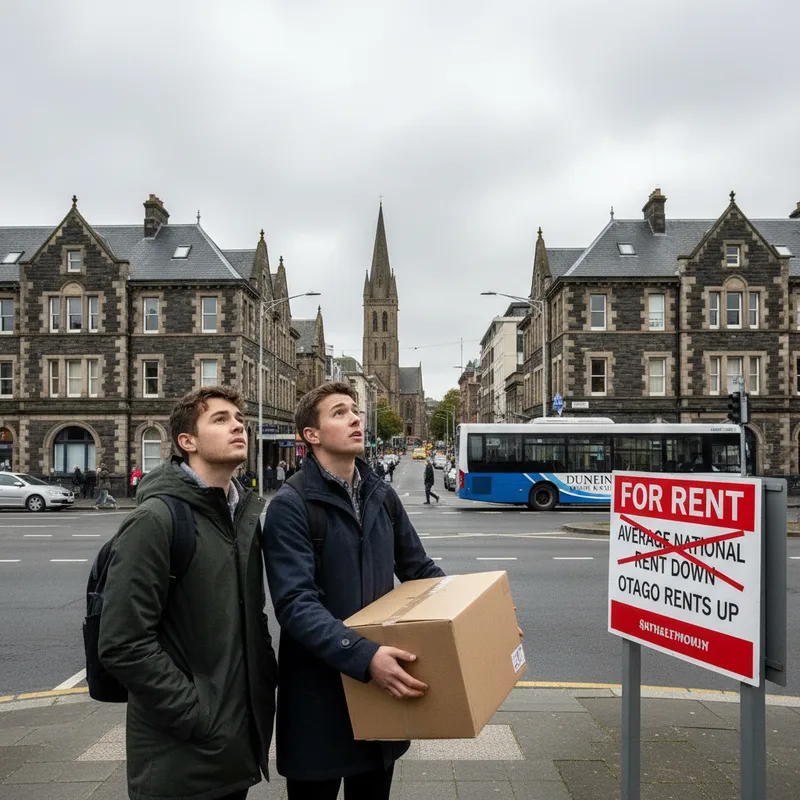
Renters in many parts of New Zealand are seeing some relief, with the national average asking rent for properties dropping by two per cent in the year to March, according to new data from Realestate.co.nz. The average weekly rent listed on the site now sits at $632, offering a glimmer of hope for tenants grappling with the rising cost of living.
The trend is most pronounced in some of the country’s largest markets. Auckland asking rents fell by 2.3 per cent, while Wellington saw a significant 6.3 per cent decrease. Other regions experienced even sharper drops, with Hawke's Bay down 8.1 per cent, Taranaki down 4.9 per cent, and Coromandel recording a substantial 11.3 per cent fall. The most affordable rentals in the country were found on the West Coast, with an average asking price of just $433 per week.
However, the national trend does not reflect the reality for renters in the South. The market here remains a story of contrasts, highlighting what property data firm CoreLogic recently described as the "uneven nature" of the current housing market. While Canterbury saw a modest 0.6 per cent increase, other southern regions experienced more dramatic shifts.
A southern contrast
In a stark defiance of the national trend, the Central Otago Lakes district saw average asking rents skyrocket by 12.3 per cent, reaching an average of $903 per week. This makes it one of the most expensive places to rent in the country, as demand continues to significantly outstrip supply. Meanwhile, Southland also saw a notable increase of 8.6 per cent, though its average rent of $497 remains well below the national average.
The situation in Dunedin itself presents a complex picture. While specific March data for the city was not broken out in the national report, a look at current listings reveals a wide spectrum of prices. A one-bedroom apartment in Dunedin Central can be found for around $410 per week, while a larger five-bedroom family home in Roslyn is seeking tenants at $965 per week. A modern three-bedroom home in Kenmure is listed for $600 a week, demonstrating the varied market depending on location and property size.
This follows data from earlier in the year that showed unusual market behaviour in the region. In January, the number of rental listings in Otago had dropped by over 30 per cent compared to the previous year, yet average prices also fell by 4.1 per cent to $519, an anomaly in the usual principles of supply and demand.
Economic pressures and supply issues
Economist Shamubeel Eaqub attributes the general decline in rents to a combination of factors, including sustained pressure on household incomes and an increase in housing supply in key areas like Auckland relative to demand. He noted that a slowdown in population growth has played a significant role. "When we had no immigration, it turns out we didn't have a lot of population growth," Mr Eaqub said.
Data from Stats NZ for the March quarter supports this view, showing there are approximately 680,000 rented dwellings in New Zealand, making up about 32 per cent of all private housing. The agency's "flow" measure, which tracks only newly-let properties, showed a yearly decrease of 2.1 per cent, indicating that new tenancies are being secured at lower prices than a year ago.
Adding another layer to the market dynamics is a nationwide dip in the number of rental properties available. Listings across the country dropped by 2.8 per cent. Realestate.co.nz spokesperson Vanessa Williams says this is a crucial figure to watch.
The market is relatively stable for now, but in regions like Central Otago Lakes District, where demand continues to outstrip supply, renters continue to pay well over the national average.
This supply squeeze is particularly evident in the competitive Queenstown and Central Otago regions, and it could signal a reversal of fortune for tenants elsewhere if the trend of shrinking rental stock continues. A similar supply crunch could see the recent price drops in other major centres begin to level off or even climb again.
What it means for Dunedin renters
For now, the Dunedin market appears to offer a range of options, but prospective tenants must navigate a landscape of varying prices depending on the suburb and property type. The influence of the city's large student population, centred around the University of Otago, creates seasonal demand shifts that add further complexity to the rental market outside the national trends.
The broader economic context suggests that while confidence in the property market is slowly returning, significant price growth is expected to remain subdued for the time being. This balance of factors, including official rental price indexes and efforts to manage the city's growth, such as plans to reduce emissions, all play a role in shaping the housing landscape.
Looking ahead, Ms Williams warns that a continued decline in the number of available rental properties could shift the balance. If supply keeps tightening, the current stability and price relief experienced in some regions may prove to be temporary, putting upward pressure on rents once again across the country. As local voters are urged to ensure they are enrolled for upcoming elections, the cost of housing is certain to remain a key issue for residents.