

A Nelson man who embarked on a 750-kilometre road trip to Dunedin with his family to engage in a significant drug deal has been sentenced to three years and two months in prison.
Bo-Dean Allan Little, 33, appeared in the Dunedin District Court for sentencing this week after earlier pleading guilty to a raft of charges, including possession for supply of cannabis, MDMA, LSD, and ketamine.
The court heard that Little had travelled to the city believing there was a commercial opportunity, telling police after his arrest that he had identified a 'need in the Dunedin market' for cannabis and decided to fill it. His venture was cut short when police raided his George St motel room on April 15 last year, uncovering a substantial quantity of illicit substances and cash.
The sentence marks another success for police in the ongoing battle against drug distribution networks in the lower South Island, which officials say cause significant harm to vulnerable communities.
The motel room raid
Acting on intelligence, police executed a search warrant at the central city motel where Little and his family were staying. The search quickly revealed the commercial nature of his operation. Officers located approximately 2.5 kilograms of cannabis, packaged and ready for distribution.
Alongside the cannabis, the search uncovered a significant cache of psychedelic and party drugs. Wrapped in tinfoil and hidden inside a supplement container were 248 tabs of LSD. Police also found more than 11 grams of MDMA, commonly known as ecstasy, and nearly 30 grams of the anaesthetic drug ketamine, which has a history of misuse as a recreational substance.
The search also yielded $4571.50 in cash, which Judge David Robinson later ordered to be forfeited to the Crown. During the investigation, Little initially refused to provide the PIN for his cellphone, a move that only delayed the discovery of further evidence of his drug dealing activities stored on the device. His sentence also included a driving disqualification of 12 months and one day for a separate drink-driving charge.
The variety and quantity of the drugs suggest a well-supplied operation intended to cater to different segments of the local illicit market. The incident highlights the continued challenges authorities face in monitoring and intercepting drug couriers using main transport routes to supply regional centres like Dunedin. Public access to court records has become more streamlined in recent years, allowing for greater transparency in cases such as this. Digital tools have transformed public access to court records, making the outcomes of these proceedings more accessible to the community.
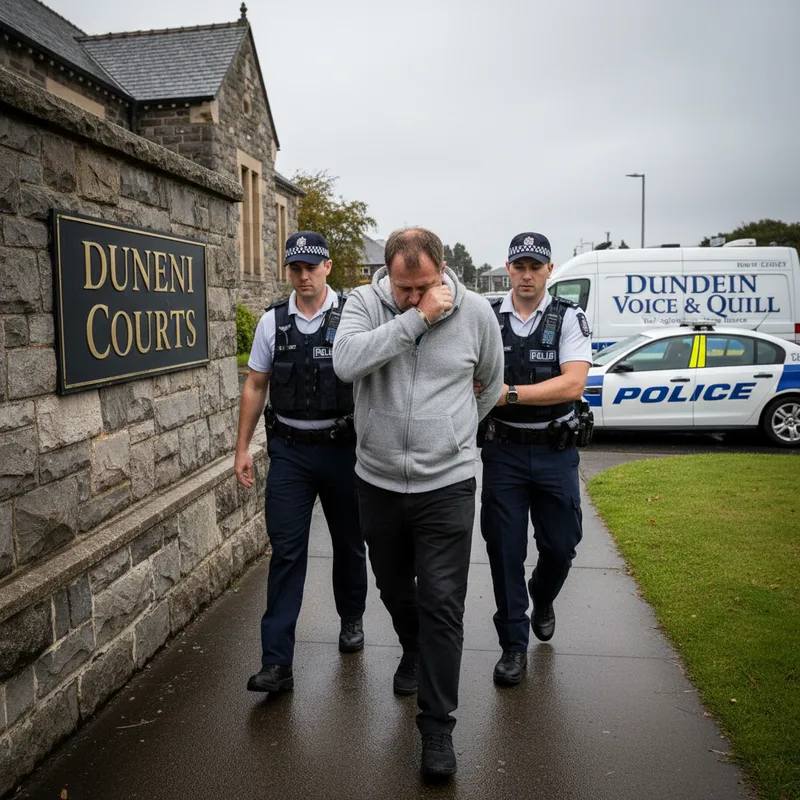
Court hears of addiction and personal turmoil
During the sentencing hearing, Little’s counsel, Andrew Dawson, offered insight into his client's personal struggles. The court was told that Little developed a debilitating ketamine addiction following an injury, which served as a primary driver for his offending. Mr Dawson noted that Little had endured a difficult childhood and was now trying to escape the 'cycles he was in'.
Mr Dawson said his client had recently found faith through his engagement with the Salvation Army and expressed a strong desire to attend a residential rehabilitation programme upon his release from prison to address his long-standing addiction issues.
Judge David Robinson acknowledged the defendant's personal circumstances and efforts toward rehabilitation. He noted Little showed good insight into the widespread harm his dealing caused to others and described his focus on changing his future as 'remarkable'.
He wants to break out of some of the cycles he was in.
Police clamp down on South Island drug trade
Little’s case is representative of a broader pattern of drug distribution that police in the Otago region are actively working to dismantle. Law enforcement officials have repeatedly stated their commitment to targeting organised crime groups that profit from the sale of illicit drugs at the expense of community wellbeing.
In a separate recent operation, Otago Lakes Central Police arrested two men in Queenstown and Cromwell, seizing over $200,000 worth of methamphetamine and more than $30,000 in cash. Detective Senior Sergeant Malcolm Inglis said at the time that police would continue to focus on the drug trade, 'especially anyone dealing methamphetamine as it is well-known the damage it does to communities'.
This sentiment was echoed in another recent Dunedin-based investigation, Operation Rubus, where a 67-year-old man was arrested after being found with firearms, stun guns, and controlled drugs. 'Controlled drug distribution continues to have a significant negative impact on families in our communities,' said Detective Senior Sergeant Nik Leigh following that arrest. 'Those involved. will continue to be targeted by police.' Under New Zealand's Misuse of Drugs Act 1975, substances like MDMA and LSD are classified as Class A or B drugs, carrying severe penalties for their supply.
These operations, stretching from Nelson to Dunedin and across Central Otago, illustrate a coordinated police strategy to disrupt the supply chain at multiple points. Authorities maintain that public information is crucial and actively encourage residents to report suspicious financial activities or individuals involved in the drug trade.
Police have affirmed that their goal is not only to prosecute offenders but also to offer support for those affected by drug addiction, stating they are happy to connect people with necessary support agencies. As Little begins his prison sentence, his stated goal of rehabilitation reflects a critical step in breaking the cycle of addiction and crime that affects so many individuals and the wider community.