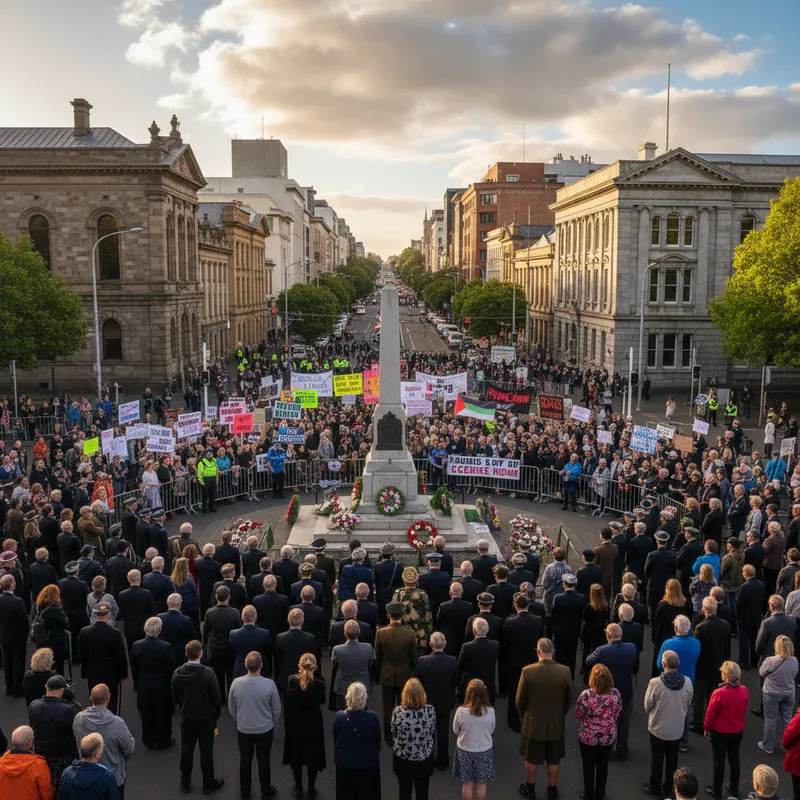
Thousands of Dunedinites gathered in the pre-dawn chill at the Queens Gardens Cenotaph on Saturday to commemorate Anzac Day, marking a day of solemn remembrance across the city that also saw significant protests regarding contemporary political issues.
The traditional dawn service began with the ground-shaking boom of a 25-pounder field gun, a stark reminder of the conflicts that shaped the nation. Crowds stood in quiet reflection, paying tribute to the "thousands upon thousands" who have served and sacrificed in wars and conflicts. For many, the service is a deeply personal affair, an opportunity to connect with family history and honour the legacy of service members.
Among those in attendance were many of the city's youngest residents, proudly wearing the medals of their grandfathers and great-grandfathers. Seven-year-old Ronin Parker, sporting his grandfather Mal Parker’s medals, embodied the multi-generational importance of the day, ensuring the sacrifices of the past are carried into the future.
A city united in remembrance
The spirit of commemoration extended throughout Dunedin. At the HMNZS Toroa naval base, volunteers led by Dunedin RSA's Sally Turner meticulously prepared hundreds of posies, a small but poignant tribute to lay at the city's memorials. The naval environment provided a fitting backdrop for the task, connecting the volunteers' work directly to the service branches they were honouring.
In the world of sport, the Green Island rugby club paid their own unique tribute. Players took to the field against Kaikorai in special jerseys featuring red alongside their traditional green and gold, honouring the 98 servicemen from the club who fought in World War I, 18 of whom never returned. The gesture served as a powerful link between community sport and national history.
Elsewhere, a group of runners and walkers chose to mark the day with a challenging excursion to the Otago Peninsula Fallen Soldiers Memorial. Participants undertook the steep climb to the hilltop monument, reflecting on the arduous efforts of soldiers while taking in the “absolutely beautiful” view from the summit. The event blended physical activity with poignant remembrance, offering a different kind of commemorative experience.
The evening saw the Dunedin RSA Choir, under the direction of musical director Karen Knudsen, present its annual Anzac Revue at Knox Church. The performance added a musical dimension to the day's reflections, with the choir reported to be in excellent voice.
Passionate protests fill the Octagon
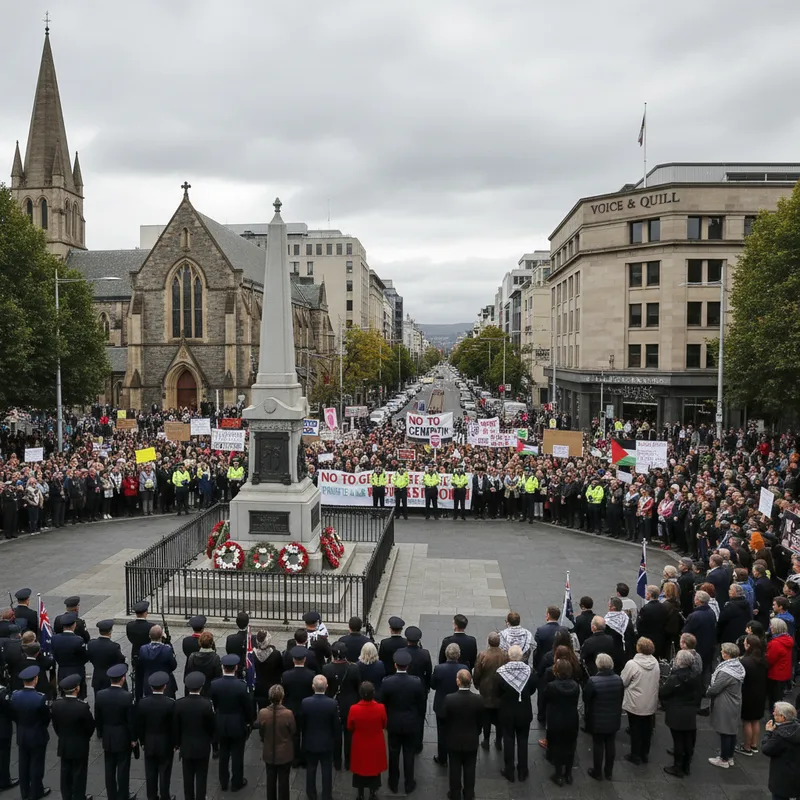
The Octagon was also the scene of a separate demonstration, as hundreds gathered for a pro-Palestine rally calling for a ceasefire in Gaza. The event in Dunedin was part of a series of similar protests held across the country, highlighting another major international issue of deep concern to many New Zealanders. The convergence of solemn Anzac ceremonies and passionate political protests underscored a day of complex civic engagement in Dunedin, with similar vocal demonstrations occurring in Sydney, where a man was arrested after booing marred the Anzac Day service.
The protest targeted proposed legislation that would define the term "woman" in all New Zealand law as "an adult human biological female". One speaker at the rally accused NZ First leader Winston Peters of attempting to erase the legal status of transgender people.
Mr Peters has defended the bill, which is not official government policy and would only be debated if drawn from the parliamentary ballot. He stated the proposal was about aligning with biological facts and not pursuing a "woke leftist ideology track".
It would be catching up with the mass majority of people in the world.. [The proposed law is simply] putting the facts out there that are biologically correct.
When questioned on its enforcement, Mr Peters said challenges would likely arise only if a transgender woman entered a single-sex space or sought to compete in certain sports. Further details on the proposed legislation can be found on the New Zealand Parliament website.
The Octagon was also the scene of a separate demonstration, as hundreds gathered for a pro-Palestine rally calling for a ceasefire in Gaza. The event in Dunedin was part of a series of similar protests held across the country, highlighting another major international issue of deep concern to many New Zealanders.
A day of reflection and debate
The convergence of solemn Anzac ceremonies and passionate political protests underscored a day of complex civic engagement in Dunedin. The juxtaposition was highlighted in a pointed speech by Montecillo Trust chairman David More at the Montecillo Veterans Home & Hospital. He took aim at former US President Donald Trump, suggesting his leadership has put the world on a path reminiscent of the conditions that led to World War II, linking historical reflection directly with contemporary global anxieties.
While police were busy monitoring the demonstrations, two officers inadvertently became part of a nearby drag bingo event next door to where former Prime Minister Jacinda Ardern was holding her book tour, in a moment of unexpected light-heartedness on a day of otherwise serious contemplation.
The dual nature of the day, encompassing both remembrance of past sacrifices for freedom and the active exercise of democratic freedoms in the present, painted a vivid picture of Dunedin's community life. As the city honoured its history, its residents also demonstrated their passionate engagement with the defining issues of today and tomorrow.