Tūhura Otago Museum is cementing its reputation as a cornerstone of Dunedin’s cultural and educational landscape, drawing locals and tourists alike with its vast and varied collection. Located on Great King Street, the museum has been a city institution for over 150 years, growing from humble beginnings to house more than 1.5 million objects that tell the stories of nature, culture, and science from Otago, Aotearoa, and across the world.
Open daily from 10am to 5pm, the museum offers a wide range of free galleries alongside its ticketed attractions. Visitors can embark on a journey through human history and creativity in the Tāngata Whenua, Pacific Cultures, and People of the World galleries, each showcasing remarkable artefacts that connect our community to its past and to distant lands. The museum provides an immersive experience that caters to a wide range of interests, from ancient history to modern science.
The institution also regularly hosts special programmes and events, such as the recent celebration of New Caledonia's Citizenship Day, which offered an in-depth look at items from the Kanaky New Caledonia display. These events highlight the museum’s role as a dynamic community hub, not just a static collection of artefacts.
A journey into natural history
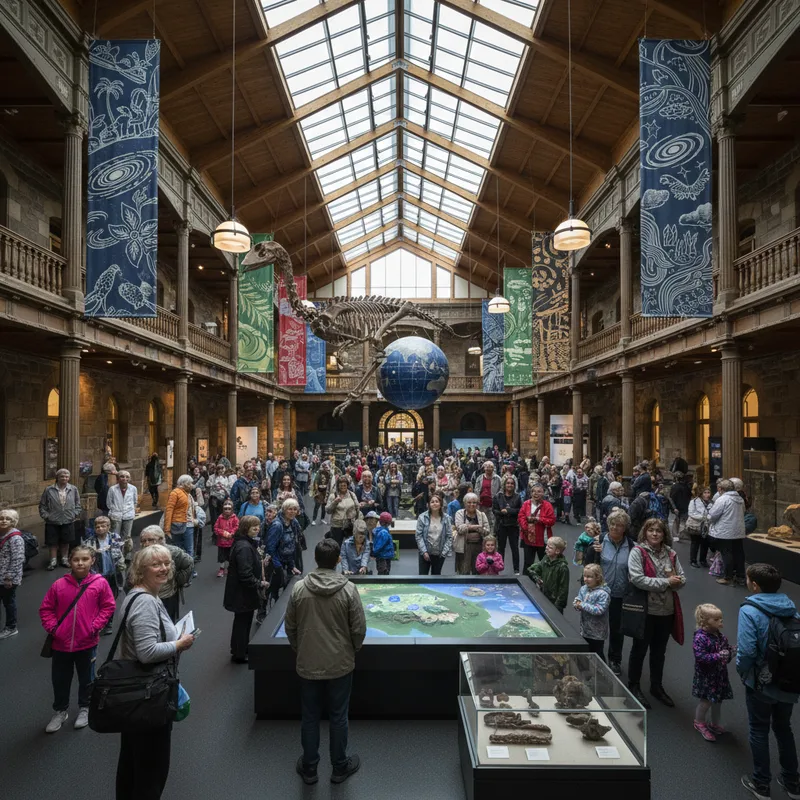
The museum’s natural history collection is particularly noteworthy, boasting some of the world's most significant treasures. The Southern Land, Southern People gallery and the iconic Animal Attic are home to a stunning array of specimens that chronicle the unique biodiversity of Aotearoa New Zealand. Among the most impressive exhibits is what is considered the world’s most comprehensive display of articulated moa skeletons, offering a tangible connection to the giant birds that once roamed the land.
Alongside the moa, the museum holds one of only three complete Haast’s eagle skeletons in existence worldwide. This massive predator was once at the top of the food chain, and its skeleton provides a dramatic insight into the country's prehistoric ecosystem. The collection also includes several incredibly rare moa eggs, fragile survivors from a lost world. These exhibits are not just scientifically important; they are a powerful reminder of the fragility of ecosystems and the importance of conservation, a theme that resonates with current environmental efforts discussed at events like the Wild Dunedin festival.
This deep dive into natural history provides visitors with a unique perspective on the evolution of New Zealand's flora and fauna, grounding local stories in a global scientific context. The long-standing relationship between the museum and the University of Otago has enriched these collections, solidifying their value for both teaching and public display.
The wonders of Tūhura Science Centre
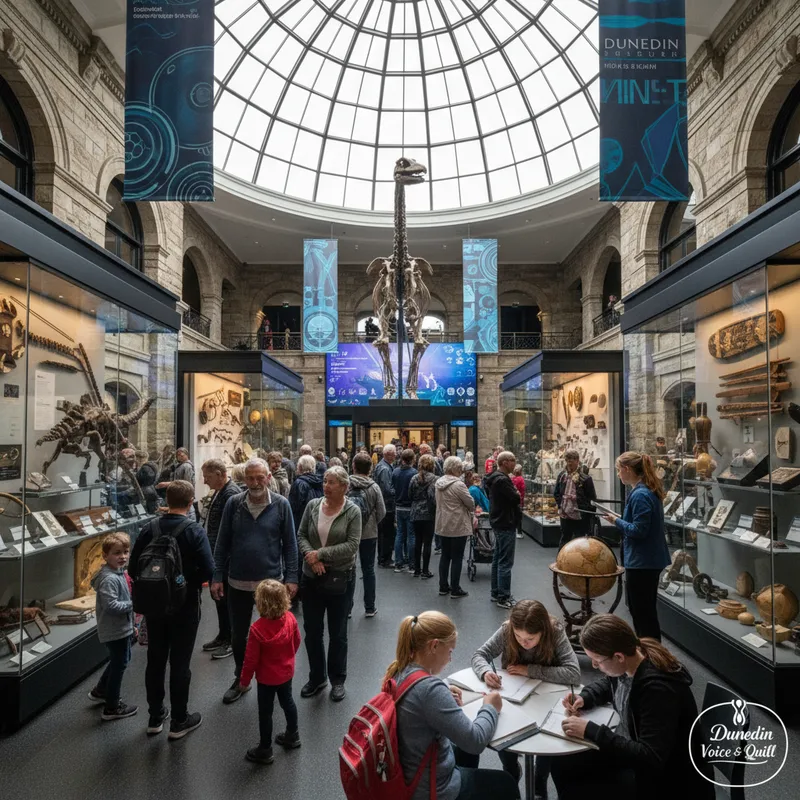
A major drawcard for the museum is the Tūhura Science Centre, New Zealand's largest science centre. It is a world of discovery and play, designed to awaken curiosity through more than 40 hands-on interactive exhibits. From a thrilling three-storey slide that demonstrates the principles of friction and gravity to a whimsical bike-riding skeleton that reveals the mechanics of movement, the centre makes complex scientific ideas accessible and fun for all ages.
The centrepiece of Tūhura is its Tropical Forest, a three-level butterfly enclosure that is famously known as 'the hottest place in Dunedin.' Maintained at the warmth and humidity of a tropical rainforest, it features a stunning five-metre-high waterfall and a sky bridge that offers panoramic views of the lush environment. Here, hundreds of exotic butterflies flutter freely, creating a magical and immersive experience that transports visitors to another world.
Significantly, Tūhura is the only bicultural science centre in the world. It uniquely integrates the Kai Tahu creation story and Māori art with scientific concepts, grounding universal principles in the context of local tangata whenua narratives. This approach offers a distinctly Aotearoa perspective on science and innovation, setting it apart from other institutions globally. The experience can be further enhanced with a visit to the museum’s 360-degree Planetarium, which takes visitors on breathtaking journeys through the cosmos.
From a box of rocks to a city icon
The museum’s story began modestly with a collection of rocks gathered by Sir James Hector during the Geological Survey of Otago. These specimens were first displayed in 1865 at the New Zealand Exhibition in Dunedin, where they were labelled simply ‘Otago Museum’. This initial collection remained in the city and was housed in the Exchange Building, where John Wickliffe House now stands.
As the collection grew under its first curator, Frederick Wollaston Hutton, it quickly required a new, purpose-built home. In 1877, the museum opened at its current site at 419 Great King Street, in a building designed by David Ross. At the time of the move, the collection had expanded to around 3,674 items. Today, that number has swelled to over 1.5 million, a testament to over a century of dedicated collecting and curation.
The original entrance on Great King Street is still visible, now serving as the entry to the 1877 Gallery, named in honour of that pivotal year. For many decades, the museum was managed by the University of Otago, a relationship that helped build its historically valuable teaching collections. Although it became self-governing in the 1950s, it maintains close ties with the university, continuing a long tradition of collaboration in research and education. Students looking for accommodation nearby can find helpful information in 30 best things to do in Lower Hutt (2026 ultimate guide).
More than just exhibits
Beyond its galleries, Tūhura Otago Museum functions as a vibrant community space. It supports the Tiaki Promise, a commitment to care for New Zealand for now and for future generations. Its on-site shop has been recognised as one of the city's best gift shops, offering a curated selection of items related to the collections and exhibitions. The museum’s impressive spaces, from historic halls to modern atriums, are also available for hire as venues for private functions and events, further integrating the institution into the city’s social fabric.
As it continues to evolve, Tūhura Otago Museum remains dedicated to its mission of sharing the natural, cultural, and scientific stories of the region and the wider world. By blending education with entertainment and history with innovation, it offers an essential experience for anyone living in or visiting Dunedin, ensuring its legacy for generations to come.