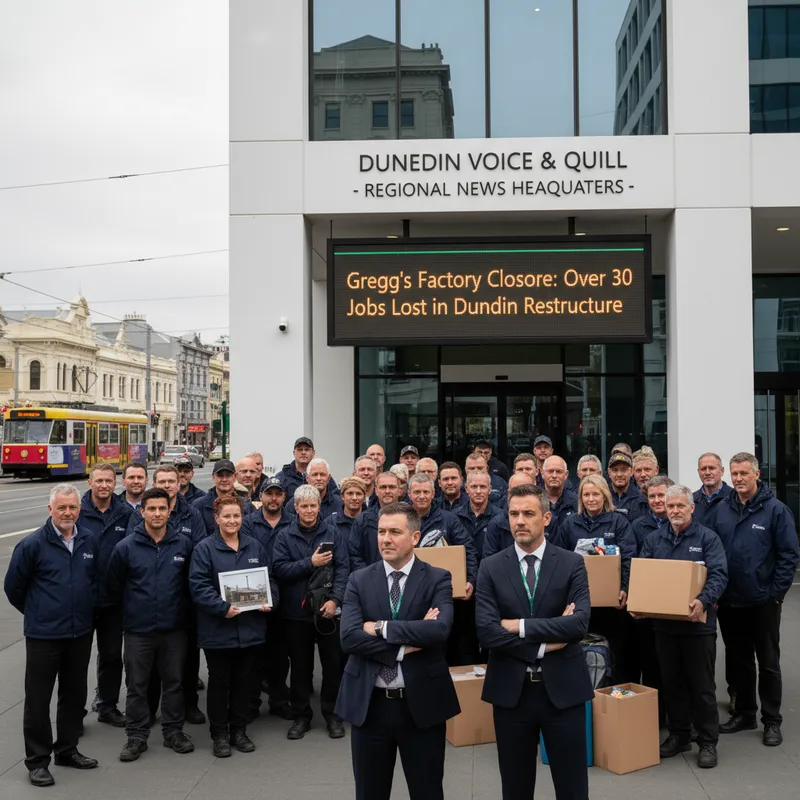
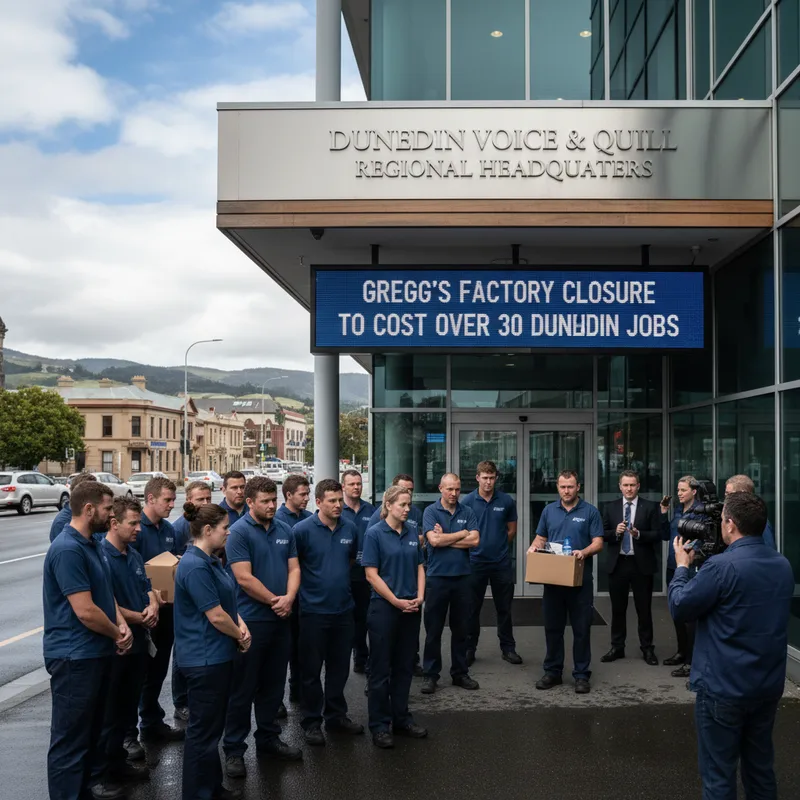
More than 30 people will lose their jobs with the confirmed closure of the historic Gregg's coffee factory in Dunedin, marking the end of a 164-year-old city institution.
Owner Heinz Wattie’s delivered the long-feared news to staff at a sombre 1pm meeting on Friday. An Etū union delegate present at the meeting said the room fell silent as the decision was announced. He said while the confirmation was expected, it was still difficult to accept.
"There weren’t a lot of questions . because there was nothing we could do. The company had made up their mind," the delegate said. He noted that some of the affected staff had dedicated 10 to 15 years to the company, with a few having served even longer.
Dunedin Mayor Sophie Barker described the news as a "nasty shock going into the weekend," expressing her sadness for the employees and their families.
A Dunedin institution
The closure severs a deep connection between the brand and the city, which dates back to 1862 when Irish-born founder William Gregg established his coffee and spice manufacturing business. For generations, the aroma of roasting coffee from the Forth St factory has been a familiar part of life in the central city, a sensory landmark for students and locals alike.
The factory is one of the last vestiges of a once-thriving food and beverage manufacturing sector in Dunedin. The loss extends beyond the immediate economic impact, representing a cultural blow to a city that prides itself on its rich commercial heritage. For many, the Gregg's brand is synonymous with Dunedin itself, a fact that makes the closure particularly bitter.
The union delegate, who asked not to be identified, lamented the loss of another local icon. "Another Dunedin icon gone," he said. The factory's closure is viewed by some staff as the culmination of a long period of uncertainty.
'Victim of corporate neglect'
"And we’re the victim of corporate neglect," the delegate added, capturing a sentiment of abandonment felt by workers who have given years of loyal service. The decision comes as part of a sweeping national consolidation by parent company Heinz Wattie's, which is set to cut approximately 300 jobs across New Zealand.
Heinz Wattie’s Managing Director, Andrew Donegan, said the decision, though difficult, was essential for the long-term health of the company in New Zealand. He stated it was the "only way forward for the long-term viability of the business" and was necessary "to strengthen the business so it could continue to manufacture and sell products in New Zealand."
Mr Donegan said the company's immediate focus is on the affected employees. "Our focus is on supporting those who are affected with redundancy packages, employee counselling, career transition services and redeployment where possible," he said.
These workers have given decades of their lives to this company. For many, this is the only job they’ve known. The impact on them and their families will be severe.
National restructure and the path forward
The Dunedin closure is one of several major changes in Heinz Wattie's national operations. The company is also shutting down its La Bonne Cuisine factory in Auckland and the Wattie's frozen vegetable factory in Christchurch. In Hastings, around 50 roles on the frozen packing lines will be disestablished, though the company says those workers will be redeployed and retrained within the Hastings operation. The restructure signals the company's exit from the frozen vegetables, coffee, and dips markets in New Zealand.
In Dunedin, efforts are already under way to mitigate the fallout for the more than 30 displaced workers. City councillor Andrew Simms said in a social media post that the city would do everything possible to support the staff. He said the Dunedin City Council's economic development unit has engaged with government agencies, including the Ministry of Social Development, as well as Business South and local employers to identify new opportunities.
"We must fully acknowledge the anxiety and uncertainty caused for many loyal Gregg’s staff, but already several prospective employers have indicated a willingness to take more staff on," Mr Simms said. This provides a small measure of hope for those facing unemployment, many of whom have families and are likely considering their options, including schools and housing. For a comprehensive overview of local education, see The Ultimate Dunedin School Guide.
The factory is expected to cease operations permanently between July and September. While local agencies are moving to provide support, the union delegate voiced a stark warning about the challenges ahead for the workers. "We know the job market’s not particularly strong out in Dunedin at the moment, so it could be difficult," he said.