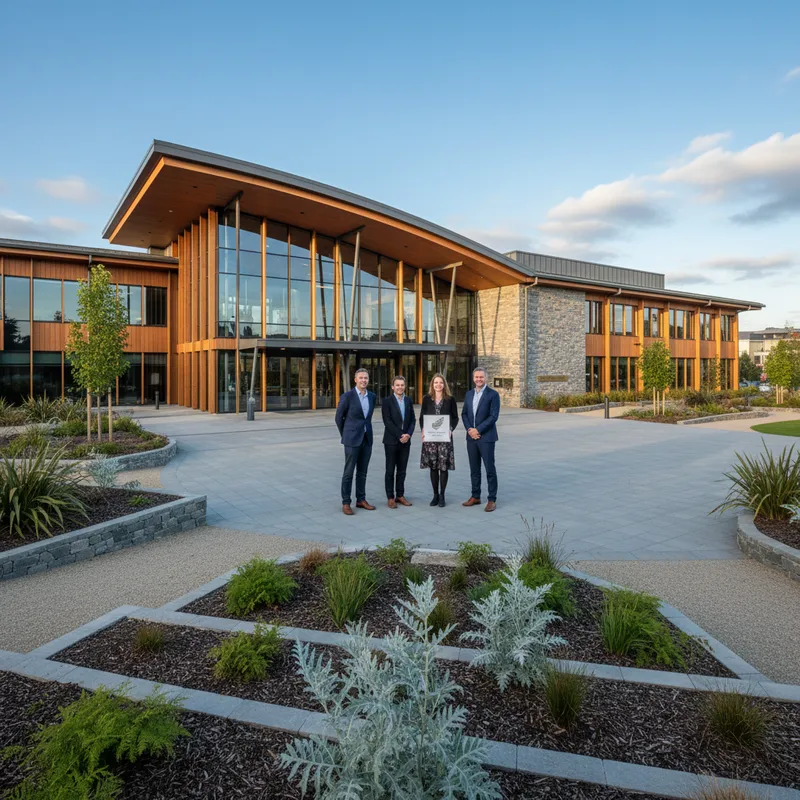
The University of Otago has celebrated four of its academic staff members for their exceptional contributions to teaching, recognising their innovation, empathy, and dedication to student success.
This year’s Teaching Excellence Award winners are Associate Professor Carolina Loch, Senior Teaching Fellow Nicole Power, Pūkenga Matua Paia Taani, and Associate Professor Esther Willing. The awards highlight the educators' commitment to creating supportive and effective learning environments.
University of Otago’s Acting Deputy Vice-Chancellor Academic, Emeritus Professor James Maclaurin, says the awards honour staff for their outstanding, student-centred teaching. "I would like to offer my warmest congratulations to Carolina, Nicole, Paia and Esther, who stood out for the excellence, engagement and empathy they bring to their teaching," he says. Similar issues have surfaced in the US, where Education Department dismantling continues with new office closure.
"They share a deep commitment to helping our tauira succeed academically and to thrive during their time at Ōtākou Whakaihu Waka.”
Associate Professor Carolina Loch
Associate Professor Carolina Loch from the Faculty of Dentistry was awarded for her passionate and engaging approach to teaching Oral Biology. She teaches students across the Bachelor of Dental Surgery, Bachelor of Oral Health, and Bachelor of Dental Technology programmes.
Her award citation noted her as a “gifted teacher who combines her passion for Oral Biology with enthusiasm, engagement, empathy for students' needs and wellbeing, and making learning fun and memorable”. Over the past nine years, she has helped educate more than 1,500 oral health professionals.
“I really enjoy seeing students get engaged and even excited about a subject they might have initially seen as dry or not very relevant to clinical practice,” says Associate Professor Loch. She describes her role as a guide rather than a lecturer, using storytelling and active participation to make science engaging. “At the core of my teaching is the belief that science isn’t just interesting – it really matters for society.”
A key element of her teaching is a focus on student wellbeing, and she dedicates time in her lectures to open discussions about mental health. “I make space for open conversations about mental health and work-life balance, recognising how important these are for supporting the success of our diverse student cohort,” she says.
Senior Teaching Fellow Nicole Power
Senior Teaching Fellow Nicole Power, who teaches Biochemistry to Health Sciences First Year students and undergraduate Biochemistry majors, was recognised for her inclusive, student-centred approach in large classes. Her award praised her for combining “clarity, care, and evidence-based design to foster belonging, engagement, and achievement”.
Ms Power says many first-year students find subjects like Biochemistry intimidating, and a large part of her role is building their confidence. “I especially value creating learning environments where students feel comfortable asking questions, making mistakes, and gradually building their understanding,” she says. “Seeing students grow in confidence and begin to enjoy the subject is incredibly rewarding.”

As a neurodivergent academic, Ms Power draws on her own experiences to inform her teaching. She focuses on designing learning environments that lower barriers for all students, noting that practices designed to assist neurodiverse learners often benefit the entire class. “I’m very conscious of designing learning environments that reduce unnecessary barriers and support different ways of thinking and learning,” she says. “Small changes in course design can have a significant impact on student confidence, wellbeing, and success.”
Pūkenga Matua Paia Taani
Pūkenga Matua Paia Taani, a kaiako (teacher) in the Māori Studies programme at Te Tumu – School of Māori, Pacific, and Indigenous Studies, received an Excellence in Teaching award in the Kaupapa Māori Category. She teaches te reo Māori papers and courses focused on Māori pedagogies.
She was celebrated as a “caring, intentional and innovative kaiako who has a deep commitment to the personal and academic growth of tauira”. Ms Taani’s teaching is deeply connected to the revitalisation of te reo Māori, a journey she shares with her students.
Sharing my own experiences is an important part of this process, helping tauira recognise that they are not alone in their journeys. I was not raised with my heritage language and have an intimate understanding of the language and cultural trauma many Māori learners may bring with them. Students often tell me that hearing my story inspires and motivates them to persevere despite the challenges they face.
Her approach also incorporates tākarokaro (play) into her teaching philosophy, inspired by her husband. She credits her whānau, former teachers (some of whom are now colleagues), and community language champions for her success.
Associate Professor Esther Willing
Associate Professor Esther Willing (Ngāti Toa Rangatira, Ngāti Koata, Ngā Ruahine, Ngāi Tahu) also received an award in the Kaupapa Māori Category. She teaches Hauora Māori (Māori Health) across Medicine, Dentistry, Oral Health, and Health Sciences.
The university recognised her for “creating safe learning spaces for tauira to understand and challenge the way in which colonisation has shaped health inequities to improve Māori health outcomes”.
Associate Professor Willing draws on her own whānau history as a person with a Māori mother and Pākehā father to facilitate difficult conversations. “I stress that we can discuss our challenging history together without carrying shame or guilt into our learning spaces,” she says. Her teaching encourages students to reflect on their own worldview and how it can help them connect with patients from all backgrounds.
She attributes her passion for history and education to her family, particularly her uncle who was a history teacher. “He really made history exciting because he made it real for us, a class of young Māori students, learning about our own tupuna and iwi. I try to emulate this in my own teaching,” she says. “Teaching so many of our health professionals is a real privilege as I can see the way they are changing health services for our society to be more culturally safe and to allow my own whānau to be seen and valued.”
A legacy of education
The University of Otago, New Zealand's oldest university, has a long history of fostering educational excellence since its founding in 1869. From its initial staff of just three professors, it has grown into a major institution with a diverse range of faculties, including the College of Education.
The study of education at Otago draws from various disciplines like history, psychology, and sociology to explore how learning shapes society. The work of this year's award winners exemplifies the university's commitment to not only academic rigour but also to the holistic development and wellbeing of its students, ensuring the next generation of professionals are equipped with both knowledge and empathy.