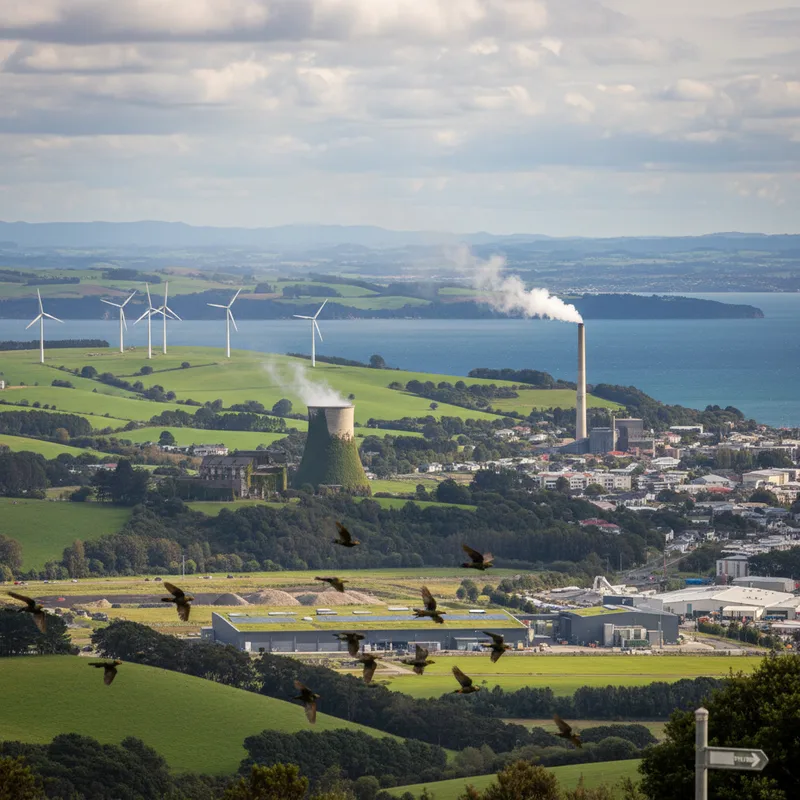
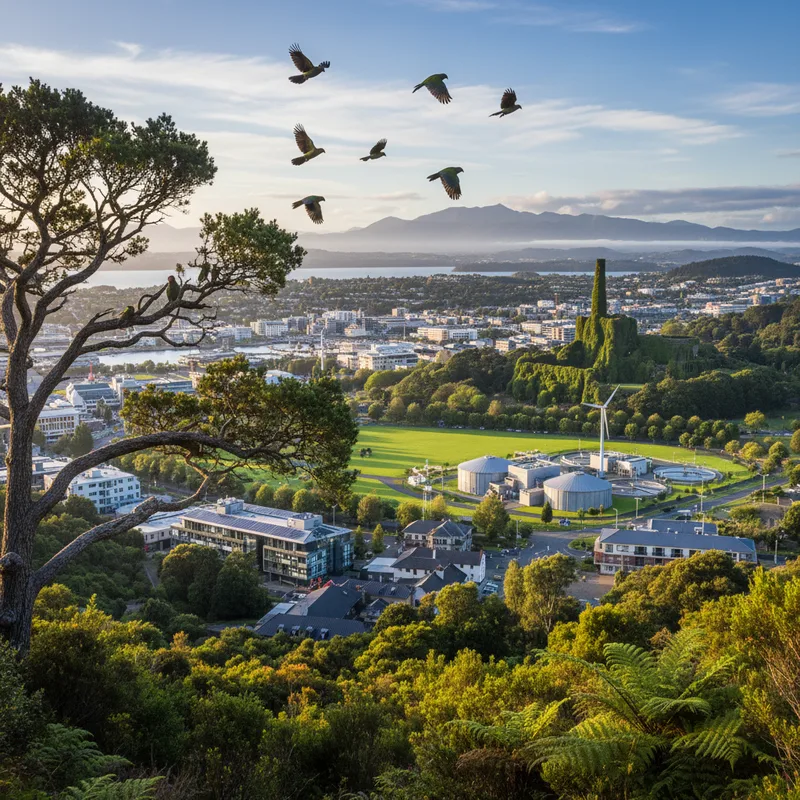
Dunedin has slashed its total greenhouse gas emissions by 13% since 2019, significant progress largely credited to advances in waste management and a major shift away from coal.
According to a new Dunedin City Council report, emissions from the waste sector have been halved, thanks to better gas capture at Green Island landfill and the successful rollout of the city's kerbside organics collection service. The transition by major institutions like the University of Otago and Dunedin Hospital to low-emissions energy sources has also led to a 70% drop in coal-use emissions.
Further reductions were recorded in industrial processes and product use, which fell by 27% due to the adoption of cleaner refrigerants and air-conditioning gases. The report also noted an 8% dip in transport emissions, linked to fewer emissions from marine freight, cruise ships, and air travel, while agricultural emissions fell by 9%, reflecting lower livestock numbers in the area.
'A step forward' for the city
Council city services general manager Scott MacLean said in a release that the overall decline was a positive development for Dunedin.
Our reductions in coal use and cleaner industrial practices show what’s possible when local institutions and businesses make deliberate changes. It’s encouraging to see that practical actions we can control are making a measurable difference in our city’s carbon footprint.
Despite these gains, the data indicates Dunedin is still very unlikely to achieve the ambitious zero-carbon target it set for 2030 after declaring a climate emergency in 2019. Transport and agriculture remain the city's two largest polluters, responsible for 44% and 38% of gross emissions, respectively.
Councillors divided on report's impact
The comprehensive emissions inventory, presented to councillors at a policy and planning committee meeting last Thursday, sparked a debate about its relevance to the public. Cr Brent Weatherall questioned the value of the complex document for everyday residents.
“Once again, the complexity of this reporting, although comprehensive, struggles to translate into something meaningful for our ratepayers,” he said. “This is again a report for the sake of reporting.”
Cr Christine Garey strongly disagreed, arguing the information was vital, particularly for younger generations. “For our mokopuna and our rangatahi, this is pivotal. they understand the importance of it,” she said, noting that many older residents are also highly engaged.
Cr Garey, referencing her own experiences in South Dunedin, highlighted the tangible financial burdens of extreme weather events linked to climate change. “As someone who has experienced the cost of those weather events, along with many members of our community in the South Dunedin area, I would be apoplectic as a ratepayer if this council was not doing what it needs to do,” she stated.
South Dunedin's unseen climate threat
Cr Garey's comments point to the serious, long-term climate challenges facing low-lying parts of the city. While emissions reports focus on atmospheric carbon, scientists are increasingly concerned about the 'unseen' threat of rising groundwater, especially in South Dunedin. Much of the suburb is built on reclaimed land, protected from the sea only by a narrow stretch of sand dunes.
As sea levels rise, the higher ocean forces the underlying water table upwards. This rising groundwater can cause flooding far inland and makes the ground less able to absorb rainwater, exacerbating surface flooding during storms. Research from GNS Science and the University of Otago highlights this complex interplay between coastal inundation, groundwater rise, and heavy rainfall.
The devastating floods of 2015 brought this issue into sharp focus for the community and for researchers like Simon Cox, a principal scientist at GNS Science. In a recent lecture, he explained how this multi-hazard scenario poses a significant threat to the thousands of homes, businesses, and critical infrastructure located near sea level in Dunedin.
The road ahead
The debate at the council meeting concluded with most councillors voting to note the report. Cr Steve Walker said the progress showed what could be achieved through “purposeful action,” while Cr Mickey Treadwell noted that the community was supportive of the council's reduction efforts. Cr Benedict Ong abstained from the vote, seeking more information on economic development, while Cr Weatherall voted against it.
While the 13% emissions reduction is a significant milestone, the city's progress against its 2030 goal will depend on its ability to address the major emissions from transport and agriculture. Simultaneously, the growing understanding of groundwater risks will demand proactive, long-term planning to protect the city's most vulnerable communities from the inevitable impacts of a changing climate. As one expert from GNS Science noted, Dunedin provides an important example for understanding these complex coastal hazards elsewhere in New Zealand and globally.
Looking for a break from climate news? Children can enjoy free entry to Larnach Castle during the school holidays, while the Tokelau Easter Festival continues to unite families in Auckland.