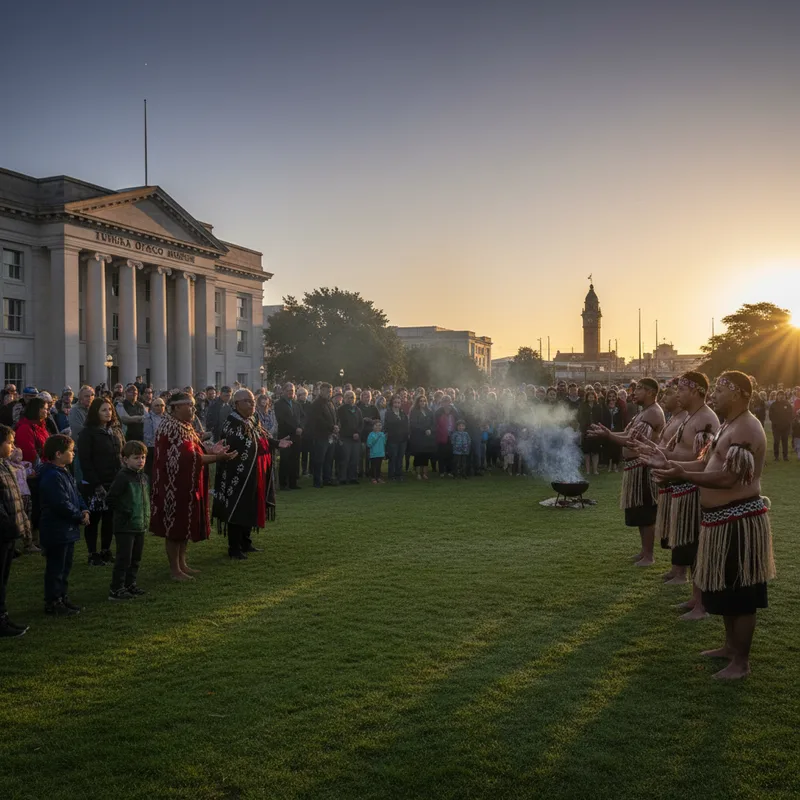
Dunedin will welcome the Māori New Year with a public dawn ceremony on the Tūhura Otago Museum Reserve on Friday, 10 July. The free event, Matariki Ahuka Nui, is a collaboration between the museum, the Dunedin City Council, Kāti Huirapa Rūnaka ki Puketeraki, and Te Rūnanga o Ōtākou.
The ceremony, which starts at 7:15 am, provides an opportunity for the community to gather and reflect on the changing of the seasons. For local iwi, the pre-dawn rising of the star Puaka, along with the Matariki star cluster, signifies the end of one year and the beginning of the next. The event is a cornerstone of Dunedin's official Matariki celebrations, blending solemn reflection with community celebration.
Matariki has seen a major revitalisation across Aotearoa in recent decades, culminating in its recognition as a public holiday in 2022. The celebration is a time for remembrance, celebrating the present, and looking to the future. Traditionally, the appearance of the star cluster was used to determine the bounty of the upcoming harvest season, with each star holding significance for different aspects of the environment and human wellbeing.
A ceremony of remembrance and renewal
The dawn service will begin with a karakia, a prayer to farewell the past year and formally welcome the new one. A central part of the ceremony is the whakamaumahara, a time dedicated to remembering those who have passed away. Organisers have extended a warm invitation to all attendees to participate by bringing a printed photograph of friends or whānau who have passed in the last year.
During this poignant part of the service, participants will be invited to hold their photographs and speak the names of their loved ones aloud. This act of collective remembrance is a key part of the Matariki tradition, honouring the connection between the living and those who have become stars. According to tradition, the spirits of the dead are believed to be carried to the heavens, where they become stars, and Matariki is a time when they are particularly visible to those on Earth.
Following the remembrance, a whakamāramataka, or explanation, will be given about the stars of Puaka and Matariki. Attendees will learn about their cultural significance and how their appearance provides guidance for the seasons ahead. This educational element connects the contemporary ceremony with the deep astronomical knowledge and oral traditions passed down through generations. Anciently, experts would view the individual stars to make forecasts and plans for the coming year, including the optimal times for planting and fishing.

Community gathering follows service
After the formal ceremony concludes, the focus will shift from solemn reflection to community connection. Attendees are invited to gather for kai, sharing food together as the sun rises. This communal aspect reinforces the spirit of togetherness and hospitality that is central to the Māori New Year.
The morning’s festivities will also feature a performance by the acclaimed local kapa haka group, He Waka Kōtuia. The group’s performance will bring energy and cultural pride to the celebrations, showcasing traditional Māori performing arts for the community.
The morning’s festivities will also feature a performance by the acclaimed local kapa haka group, He Waka Kōtuia. The group’s performance will bring energy and cultural pride to the celebrations, showcasing traditional Māori performing arts for the community.</p> The Matariki Community Fun Day is set to begin at 10 am, offering a full day of activities for all ages. Families looking for ways to engage children in the celebration will find plenty of options, continuing a day that starts with ancient tradition and moves into modern community fun. Managing large crowds for popular events has been a focus for other city celebrations, such as the Dunedin Midwinter Carnival, and for anyone seeking inspiration for seasonal activities, the guide to 35 fun things to do in Auckland this winter provides a useful reference. The museum precinct provides an ideal open space for the expected attendees.
A partnership for the people
The Matariki Ahuka Nui event highlights the strong collaborative relationship between Dunedin's civic and cultural institutions. The partnership between the Dunedin City Council, Tūhura Otago Museum, and local mana whenua, represented by Kāti Huirapa Rūnaka ki Puketeraki and Te Rūnanga o Ōtākou, ensures the ceremony is culturally authentic and accessible to all residents.
Tūhura Otago Museum, located at 419 Great King Street, serves as a vital hub for cultural and community events in the city. By hosting the official dawn ceremony, it solidifies its role not just as a repository of history and knowledge, but as a living centre for community engagement. The event is part of a wider cultural blossoming, with community art events becoming more common, from local initiatives to those seen further afield, such as live painting battles in Auckland.
The day provides a unique opportunity for all Dunedinites, regardless of background, to engage with and learn about mātauranga Māori (Māori knowledge) and the traditions of the Tangata Whenua. More information about the cultural significance of Matariki can be found through national resources like the Te Papa website.
The celebrations will continue at the museum precinct from 10 am with the Community Fun Day, offering a full day of activities to honour the new year.