The Otago Rally is on track for its biggest field since the 1980s.
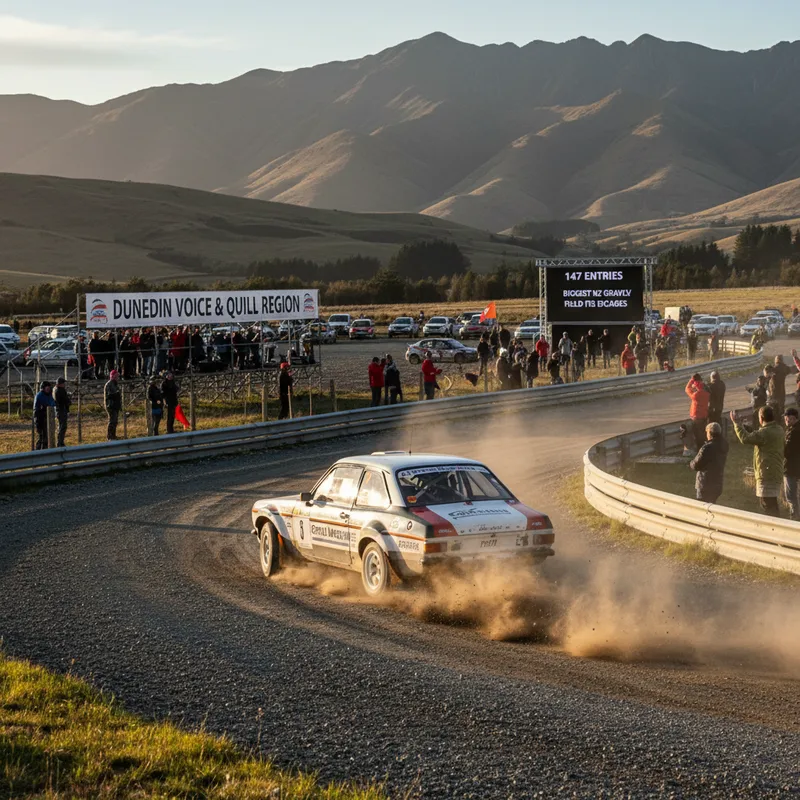
Organisers say 147 crews have entered the 50th anniversary Central Machine Hire Otago Rally just days before entries close.
The Dunedin-based gravel event is set to run 280 competitive kilometres across 16 special stages. The route uses public roads only, and it will have zero repeat stages.
The entry list includes 37 international teams from 11 countries. That is the largest overseas presence at a New Zealand rally since Rally New Zealand in 2008.
How big is the 2026 central machine hire otago rally field
Event spokesman Roger Oakley said the numbers had exceeded expectations before the formal cut-off. “We are absolutely delighted with the response of the competitors to this event,” Oakley said.
Rally organisers are pitching it as the biggest New Zealand gravel rally field since the 1980s. The last comparable era was when domestic series rounds regularly drew triple-digit grids.
It is also a rare modern example of a one-pass-only route design on this scale. The rally will string together 16 different tests, rather than cycling through the same stage more than once.
Crews will face 280 kilometres against the clock, plus liaison kilometres between stages. Gravel rallies typically make strategic use of repeats to simplify logistics, but the Otago plan trades that for variety.
Dunedin has hosted a steady run of destination events this year, from the arts calendar to street festivals. Rally organisers are hoping that the milestone edition sits alongside attractions like the April programme set out in Wild Dunedin reveals 200-event programme.
Who is coming to dunedin for the otago rally
International interest sits at the heart of the 50th anniversary push. The list currently shows 37 teams from 11 countries, which should put extra pressure on accommodation and service-park planning.
The Classic 2WD field makes up a major chunk of the entry, with 45 cars. It includes former winners and internationally recognised names, including Kris Meeke, Mads Østberg, Pasi Hagström, Deane Buist, and Derek Ayson.
Classic 4WD has also grown sharply. The organisers say it has a record 21 entries, which sets a new benchmark for that category at the event.
The rally will also welcome competitors from the inaugural 1976 event. John Keast will return in an Escort BDA, and Brian Budd will also take to the stages half a century after that first running.
Oakley said the anniversary weekend mattered beyond competition. “It is a privilege to be part of celebrating our 50th anniversary,” he said. “It’s going to be a huge motorsport event, and just as importantly, a big reunion of friendships made over many years in the sport.”
Which NZRC stars and cars will headline the 2026 otago rally
About 40 cars in the entry come from New Zealand Rally Championship ranks across multiple classes, including Classics. That concentration should make the front of the field tight, and it also deepens the fight down the order.
The leading local battle is expected to include Jack Hawkeswood, Robbie Stokes, Jack Stokes, and Dylan Thomson. Thomson has secured Ben Hunt’s winning Skoda from last year, a move that can change the pace of a season quickly.
Two-time Dakar Rally winner Toby Price adds a different kind of intrigue. Price will drive a Toyota GR Yaris, but not a Rally2 car.
Instead, he will step into what organisers describe as the first car built for the new Yaris Cup series. That decision suggests a focus on seat time and development, rather than outright class advantage.
Fans will also get a rare soundscape in the forests. Ari Pettigrew and Andy Martin will both run GT3 Porsches in the NZRC, which should make them among the loudest cars on the stages.
The Otago region has become a regular host for participation sport, from endurance formats to adaptive racing. Recent numbers in events such as the adaptive trail running series show how quickly fields can grow when a calendar date becomes a drawcard.
What is the otago rally route and why zero repeat stages matters
Organisers say the 2026 route will use public roads only. That matters for competitors because it typically delivers more consistent surface changes than private forestry roads, especially after weather swings.
A zero-repeat design also changes how teams manage tyres and notes. With repeats, crews often refine pace notes and braking points on a second pass, but this route pushes them to get it right first time.
The format can also broaden spectator options. With 16 distinct tests, fans who travel can choose different corners and landscapes, rather than seeing the same road twice.
For Dunedin, the scale of the entry list means more service crews and support staff arriving during the week around the event. It is a different visitor mix to a city-centre festival, but it hits similar pressure points for bookings and traffic.
Local councils around the country have used event support to lock in repeat visitation. A recent Australian example came when Cairns backed 14 community events with grant funding tied to delivery and reporting.
In Dunedin, the rally acknowledged support from the Ministry of Business, Innovation and Employment through its Events Boost Fund. The event also thanked the City of Dunedin for Premier Event support.
The Events Boost Fund sits within government efforts to attract and retain major events. Details of the fund and its objectives are published by MBIE on the Ministry of Business, Innovation and Employment website.
How the asia pacific rally championship and allcomers field add depth
Beyond the headline classes, the rally includes an Asia Pacific Rally Championship component. Organisers say it has improved on last year’s numbers, with eight entries from five countries.
That regional layer can matter for a gravel event in the south because it pulls in teams already travelling a long way for seat time. It also lifts the variety of cars and preparation styles in the service park.
A 50-car Allcomers field adds another block of entrants, excluding those already cross-entered in the NZRC. In practical terms, that means more cars to watch across the weekend, and more competition in the mid-pack.
Otago’s rally week often overlaps with other fixtures that pull people into the city. Council-backed upgrades and event planning elsewhere can shape how Dunedin thinks about visitor movement, including the transport impacts noted in the South Dunedin upgrade approval.
Oakley said the anniversary edition would have national significance. “This is going to be a great event for Dunedin and New Zealand,” he said.
Entries for the 50th anniversary Central Machine Hire Otago Rally are set to close in the days ahead, ahead of the event’s 2026 running.