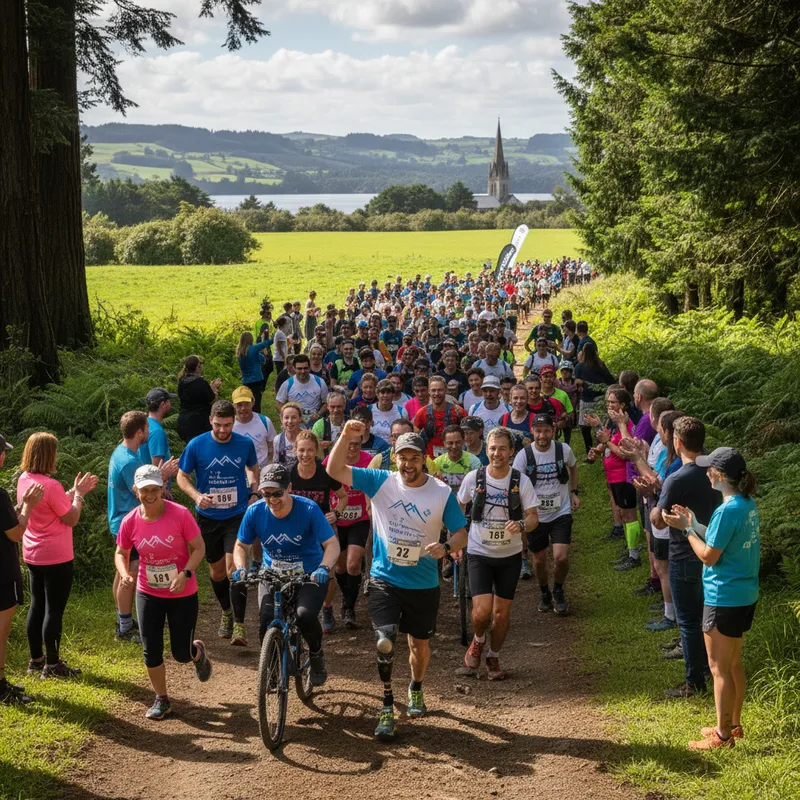
The Born to Adapt trail running series recorded its highest ever participation levels last month as the event expanded to the South Island for the first time. Nearly 200 people attended the scheduled event in Rotorua, while more than 80 participants joined the inaugural Christchurch leg. The figures indicate a growing demand for competitive trail events that cater specifically to the disability community. Organisers designed the series to remove physical and social barriers that often prevent people with disabilities from accessing off-road trails. The events are a partnership between Matthew Bryson, Peer Support and Events Coordinator at Peke Waihanga, and American race director Zachary Friedley. Friedley has previously advocated for environmental access, which aligns with local discussions such as the environmental sound talk scheduled for Dunedin. The participant list included people with limb loss and limb difference, wheelchair users, and those who are blind or have low vision. Professional para-athletes competed alongside recreational runners and able-bodied supporters. Organisers said the inclusive nature of the event allowed for a wider cross-section of the public to experience technical trail terrain that is typically considered inaccessible.
Expansion into christchurch
The launch of the Christchurch event marked a significant step in making the series a national fixture. More than 80 people attended the first South Island gathering to navigate local trails. While the Rotorua event remains the larger of the two due to its established history, the Christchurch turnout suggests a strong appetite for adaptive sports in the Canterbury region. One participant in Christchurch completed five laps of the course using crutches. Organisers cited this as an example of the individual determination the event aims to facilitate. The course was structured to be open to all fitness levels, allowing participants to choose their own pace and distance without the pressure of traditional race cut-off times. The growth of adaptive events in New Zealand mirrors international trends where sporting bodies are increasingly prioritising accessibility. Similar initiatives have been seen in other regions, such as the International Women’s Day sports breakfasts in Australia which focus on representation and inclusion. The Born to Adapt series seeks to apply those principles specifically to the rugged environment of New Zealand’s native bush and forest tracks.
Partnerships and local support
New Zealand Artificial Limb Service, also known as Peke Waihanga, provides the administrative and peer support backbone for the series. Matthew Bryson said it was an honour to bring the events to different parts of the country. He noted the importance of seeing disabled and non-disabled people sharing the trails. “It warmed my heart seeing people with various disabilities as well as non-disabled people coming together,” Bryson said. “Getting people on the trails who wouldn’t think it would be possible is fantastic. I really enjoyed seeing people challenging themselves.” The success of these events often depends on broader funding and regional support for environmental and sporting initiatives. In the Otago region, the ECO Fund provides one avenue for projects that connect people with the outdoors. While Born to Adapt is currently focused on Rotorua and Christchurch, the rising numbers suggest potential for future events in other trail-heavy regions like Dunedin or Queenstown. outdoor accessibility relies on maintained infrastructure, a topic often tied to significant local government spending like the South Dunedin upgrade project.
Future of adaptive trail running
The organisers have confirmed that the series will return to both Rotorua and Christchurch in February 2027. They expect participation numbers to continue their upward trend as the event becomes better known within the national disability community. The goal remains to create a supportive environment where participants can build confidence on difficult terrain. Zachary Friedley’s involvement brings an international perspective to the New Zealand series. Friedley has established similar programmes in the United States, focusing on the idea that disability should not be a barrier to experiencing wilderness areas. The partnership with Bryson ensures the events are tailored to the specific needs and healthcare structures found in New Zealand. The 2027 events are expected to follow a similar format to this year’s successful runs. Registration details typically open several months in advance to allow participants to arrange travel and support. Organisers will continue to work with local councils and forestry managers to ensure the tracks used are suitable for adaptive equipment and varied mobility needs.