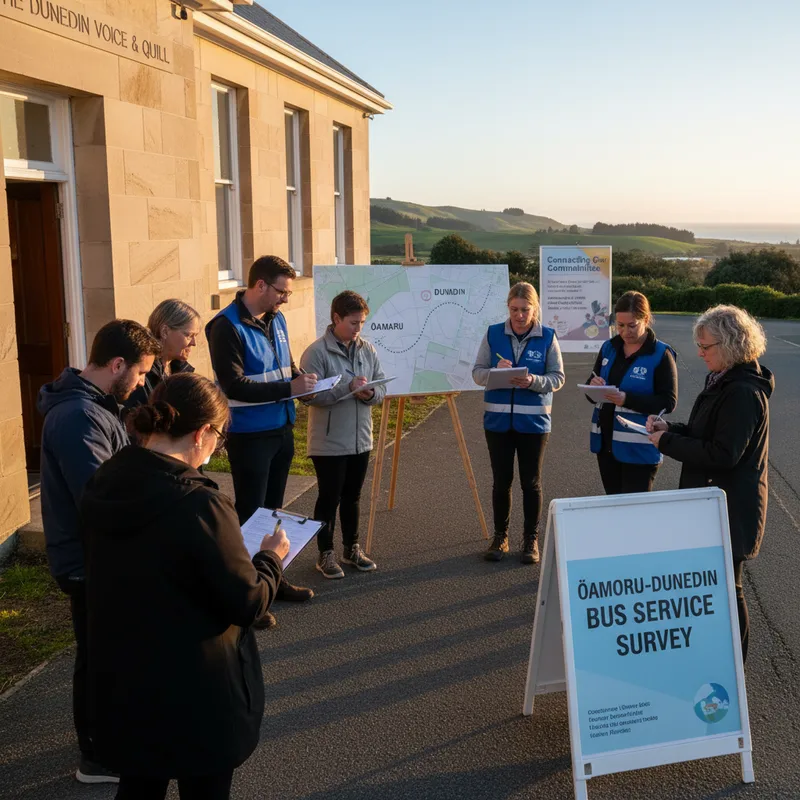
The Otago Regional Council (ORC) is exploring the possibility of a new daily bus service connecting Ōamaru and Dunedin, launching a public survey to gather community feedback on the proposal.
The potential service, which would run once a day, aims to create a crucial public transport corridor between the largest town in the Waitaki District and Otago's main urban hub. The initiative is a collaborative effort between the ORC and the Ōamaru Community Shuttle Steering Group, a local body that has been advocating for the connection.
In a statement released on Friday, the council moved to clear up any public confusion over the different information-gathering efforts, confirming it is working closely with the community steering group.
Council clarifies survey purpose
The ORC's survey follows a separate trial conducted by the Ōamaru Community Shuttle Steering Group, which collected its own data on the route's viability. The council's new survey aims to supplement this existing data and build a more comprehensive business case for the service.
Anita Dawe, the ORC’s General Manager of Regional Planning and Transport, apologised for any confusion caused and emphasised the collaborative nature of the project.
We apologise for any confusion we have caused with our survey and clarify we’re working closely with the group. We want to thank group members for collecting data from their trial, which is very helpful and will support future discussions on public transport services.
The data collected by the community group has been praised by the council as a valuable foundation, demonstrating grassroots support and providing initial insights into potential ridership and scheduling preferences.
Gauging demand for a vital link
The proposed 112-kilometre route would connect two significant population centres in the region. For many Ōamaru residents, Dunedin is the nearest centre for specialised healthcare, tertiary education at the University of Otago, and a wider range of employment and retail options. A reliable and affordable public transport service would significantly improve access to these essential services for those without private vehicles or those looking to reduce their travel costs and carbon footprint. Establishing such a service aligns with broader national goals to reduce transport emissions, a key component of New Zealand's climate change response. Similar initiatives are underway in Australia, where the NSW government signs $1.9b renewable deal for public transport. According to the Ministry for the Environment, shifting people from private cars to public transport is a critical part of meeting the country's emissions reduction targets.
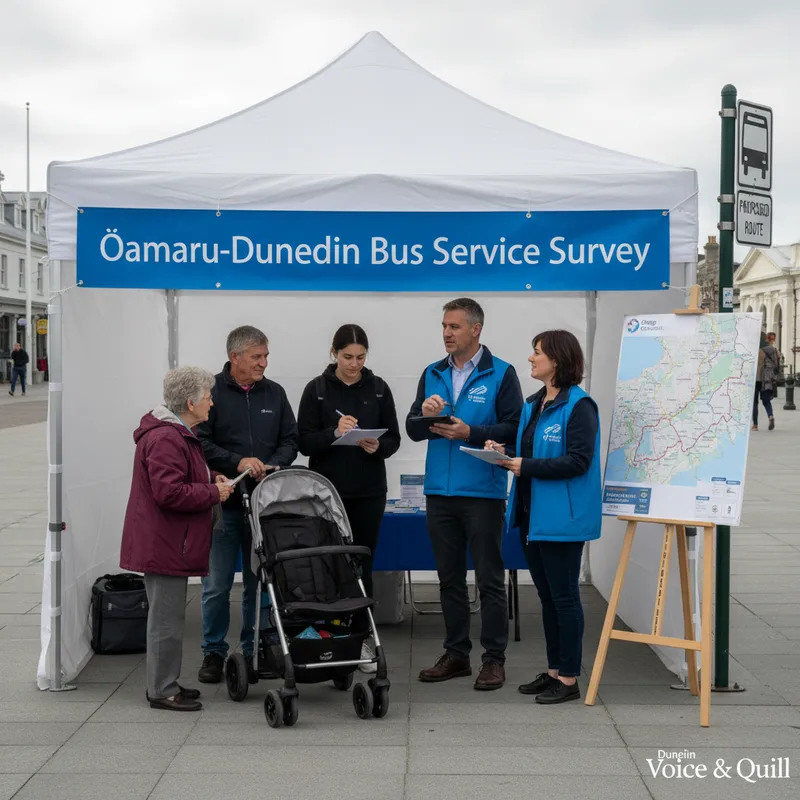
The ORC survey has already received a strong response, with 558 submissions gathered so far. Residents of both Ōamaru and Dunedin are encouraged to share their views on potential timetables, fares, and how they might use the service. People interested in having their say can find the survey on the council website until it closes on 6 May.
The road ahead
While community enthusiasm is high, Ms Dawe cautioned that the project's future rests on a thorough evaluation of its financial and logistical viability. The council must now weigh the public feedback against the realities of operational costs, funding sources, and how the new route would integrate with existing fare structures across the region's public transport network.
“It is important that we are also clear with the community that any potential future services will depend on what we find when we consider the options alongside costs, how we fund this service and related decisions on fare zone structures,” she says.
This process will involve creating a detailed business case that explores different funding models, which could include subsidies from the ORC and Waka Kotahi NZ Transport Agency, alongside fare revenue. The success of similar regional routes across New Zealand often depends on securing a mix of central and local government funding to ensure the service remains affordable for passengers while covering its operational expenses.
The decision-making process will also involve considering the social benefits, such as increased accessibility and community connection, which are harder to quantify but are a core objective for public transport investment. For those considering a move to the region, services like this can be a major factor, as outlined in the ultimate guide to moving to Dunedin, which highlights the importance of transport links.
The project also provides a reason for easier travel to Dunedin's attractions, including the Tūhura Otago Museum.
Following the survey's closure in May, the council will analyse all the collected data. The ORC will then consider the next steps for the proposed Ōamaru-Dunedin bus service in June 2026.