
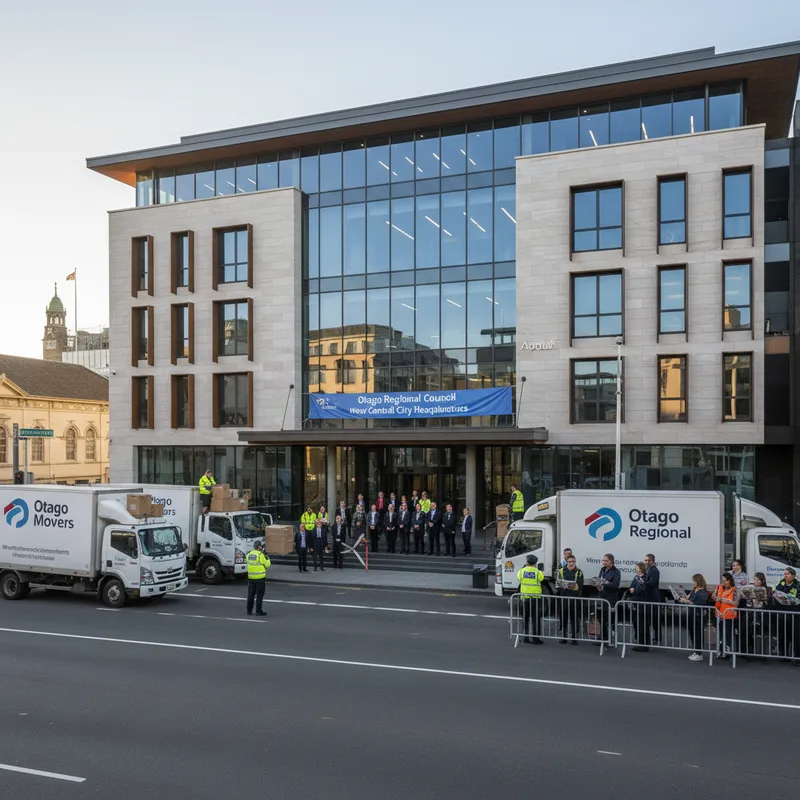
The Otago Regional Council (ORC) has started moving its Dunedin-based staff into a new, consolidated headquarters in the central city. Movers were seen this week shifting furniture from the council's long-time offices on Stafford Street to its new home in the former The Warehouse building on Maclaggan Street. The modern, multimillion-dollar premises has been gifted the name 'Aonui' by mana whenua.
Staff will officially begin working from the Aonui building on 28 April, with the first council meeting scheduled to take place in the new chambers the following day. The move marks a significant shift for the council, bringing its various Dunedin teams under one roof for the first time in years. Previously, staff were spread across multiple buildings, including the main Stafford Street office and other leased spaces.
A new chapter in Aonui
The new headquarters is the result of a long-term strategic decision by the council to improve efficiency and create a more collaborative working environment. The building was acquired by the council-owned Port Otago in 2021. In 2023, the ORC and Port Otago formalised a 40-year lease agreement, structured as an initial 20-year term with two subsequent 10-year rights of renewal.
While construction was initially slated for completion by Christmas 2024, the timeline was extended, with the final fit-out taking place in early 2026. The naming of the building, 'Aonui', reflects the council's ongoing partnership with Kāi Tahu, a key element of its operational and strategic framework. The process of naming the head office was part of the co-design work between the council and its iwi partners.
Consolidating operations is expected to foster better inter-departmental cooperation and provide a more cohesive public-facing service. The central location is also more accessible for residents of Dunedin who need to engage with council services in person.
The council's role in the region
The Otago Regional Council holds a broad mandate, managing the region's natural environment and ensuring compliance with national legislation. Its responsibilities are diverse, covering everything from air and water quality monitoring to pest management, biodiversity strategies, and public transport. The council is tasked with implementing the Land and Water Regional Plan, a cornerstone document for environmental management in Otago.
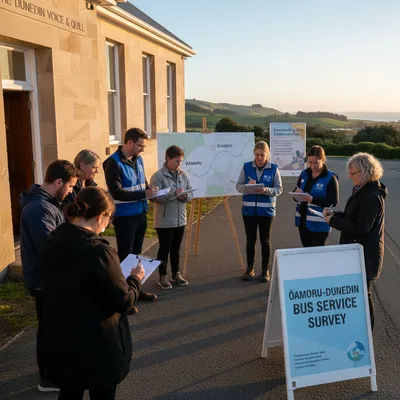
The council's work directly impacts the daily lives of residents through services like the Orbus public transit system. The efficiency of bus networks is a frequent topic of public discussion, with the council recently having to survey residents on services between Ōamaru and Dunedin. The council also plays a vital role in natural hazard management, overseeing flood defences and infrastructure strategies to protect communities across the region.
This extensive remit requires significant administrative and operational support, which the new Aonui building is designed to provide. The council's governance structure, as outlined in its Local Governance Statement, involves a team of councillors representing constituencies from Dunstan, Dunedin, Molyneux, and Moeraki, who oversee these complex responsibilities. The move is seen as an investment in the long-term operational capability required to govern a region with such a diverse landscape and a growing population.
A bold move in uncertain times
The significant investment in a new headquarters and the commitment to a 40-year lease occurs against a backdrop of political uncertainty for regional councils across New Zealand. In November last year, the central government announced sweeping reforms that could see regional councils abolished and replaced with new combined territories boards. These boards would be composed of mayors from the region's city and district councils.
This proposal has cast doubt on the long-term future of bodies like the ORC. In response to the proposed changes, the Otago Regional Council has submitted that the current regional council structure should be maintained until at least the next local body elections in 2028, arguing for continuity and stability. The debate over regional governance mirrors challenges faced by other local bodies to secure adequate resources, such as the situation where Hamilton leaders are demanding more firefighters for their growing city.
The commitment to the Aonui building can be interpreted as a statement of confidence by the ORC in its enduring role and value to the region. It represents a physical and financial grounding of the council's presence in Dunedin, even as its structural future is debated at a national level. The council's planning for major projects, like the University of Otago's campus master plan, illustrates the long-term thinking required for regional governance.
With staff set to occupy the building within days, the immediate focus will be on ensuring a smooth transition and continuity of services. The first council meeting at Aonui on 29 April will not only be a house-warming for the new premises but a clear signal that the Otago Regional Council is continuing its work for the region.