
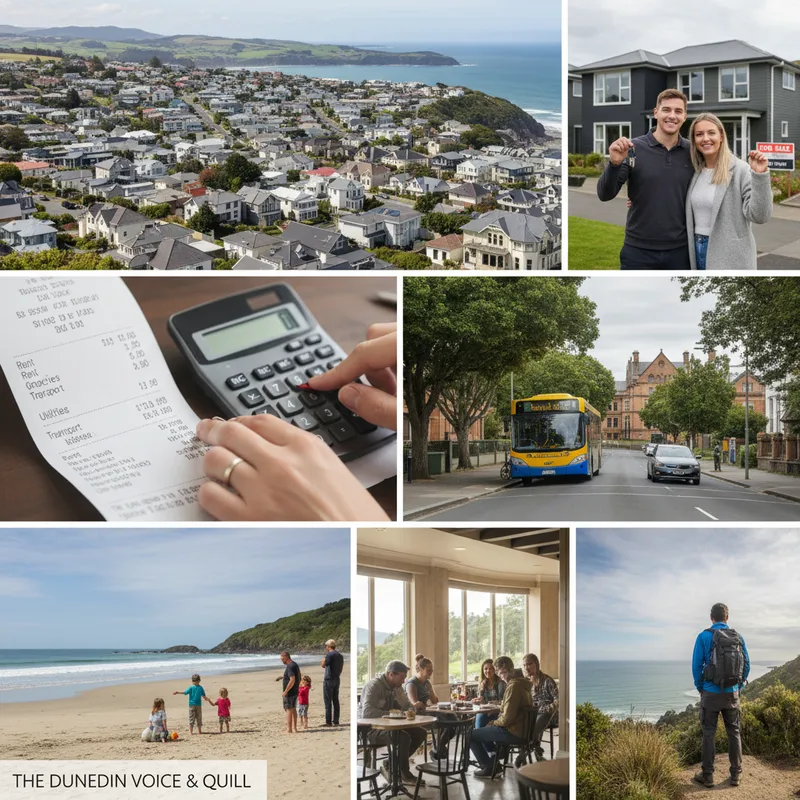
Moving to Dunedin can feel like a leap, even if you already know the city by its student reputation or its postcard views from Signal Hill. The reality is a compact, liveable place with distinct neighbourhood personalities, a housing stock that rewards careful inspection, and a lifestyle that tends to orbit beaches, bush tracks, cafés and community events.
This guide is written for people planning a relocation and doing the usual late-night spreadsheet work: where to live, what it costs, how to get around, and what day-to-day Dunedin actually looks like. Prices shift and availability can be tight, so treat the numbers as planning ranges, then confirm with current listings and providers before you commit.
Best suburbs in Dunedin for families and schools
If you are moving with kids, you will probably prioritise insulation, sun, a bit of section, and being close to parks and schools. Dunedin’s topography matters, a house two streets apart can have very different sun, wind and winter warmth.
Maori Hill (north of the town belt) is a long-time favourite for families because it is close to the city, has leafy streets, and is handy to the Roslyn village shops. Expect character villas, renovated family homes, and higher price tags than many other suburbs. Practical check: parking can be tight on some streets and older homes may need double glazing or underfloor insulation.
Roslyn sits just above the CBD and is popular for quick commutes and views. It is well-served by buses and has a cluster of essentials around Roslyn Village. Because it is on the hill, ask about winter sun and check for damp, especially in shaded gullies.
St Clair and St Kilda offer a beach-first lifestyle, surf clubs, playgrounds and cafés. They are flat by Dunedin standards, which makes walking and cycling easier. Trade-off: the coastal strip can be exposed to southerlies, and some streets have older housing that can be cold if not upgraded.
Wakari and Halfway Bush are worth a look if you want more house for your money while staying within an easy drive to town. You will find 1960s–1980s homes that can be easier to heat than unrenovated villas, plus access to the town belt for weekend walks.
Mosgiel (out on the Taieri Plains) is often on family shortlists for its warmer, frostier inland climate, larger sections, and a distinct small-town feel. It adds a commute, but it can suit people who want space and do not need to be in the CBD every day.
Quick cost planning: As a starting point, many relocating families budget weekly rent in the mid-to-high hundreds for a modern 3-bedroom in sought-after suburbs, with price and quality varying sharply by insulation and sun. Issues managing growth and associated costs are a common consideration for councils, as seen in the Ballarat council's budget wish list. If buying, talk to a local mortgage adviser and check recent comparable sales suburb by suburb.
Best suburbs in Dunedin for professionals and commuters
If you are moving for work and want a short commute, focus on suburbs with fast access to the CBD, Hospital and University precinct, plus reliable bus routes.
North East Valley is a practical option with a mix of student flats and long-term residents. It is close to the university, has supermarkets nearby, and offers a range of house sizes. Tip: inspect carefully for heating and ventilation, as some rentals were built for a different era.
Mornington and Caversham provide good access to both the CBD and the southern suburbs. Caversham in particular has a strong local shopping strip and is handy to the motorway for people commuting out of town.
Central Dunedin suits people who want to walk to work and give up a car. You will find apartments, townhouses and a lot of older stock. Noise can be a factor near the Octagon and student areas, so check the street at night before signing.
Port Chalmers is for those happy to trade a longer commute for harbour views and a tight-knit community vibe. It is also a common choice for people who like an artsy, coastal lifestyle. Factor in travel time and winter road conditions on the hill sections.
Transport note: Dunedin’s hills shape commuting times more than the map suggests. Trial your commute route at peak hour if you can, especially if you will be crossing the one-way system or travelling in from Mosgiel.
What does housing cost in Dunedin in 2026?
Dunedin’s housing costs are often lower than Auckland or Wellington, but the bigger issue is quality. The city has a lot of older timber housing, and winter comfort depends on insulation, heating, glazing, and whether the property gets sun.
Renting: In broad terms, a room in a flat is usually the cheapest entry point, followed by older 2–3 bedroom houses, then modernised family homes in premium suburbs. For a detailed, student-to-young-professional oriented breakdown of rentals, rights and how to secure a place, see our internal guide: The ultimate guide to flatting in Dunedin: rentals, rights, how to get a place.
Buying: Dunedin has everything from heritage villas to new builds on the city fringe. When you are comparing prices, compare like-for-like on insulation, heating, and sun. A smaller, warmer house can be cheaper to run than a larger, colder villa.
What to check at open homes: ask about ceiling and underfloor insulation, heat pump location and size, HRV or ventilation systems, window condition, and whether the property has any history of damp. In colder months, bring a moisture meter if you are serious.
Authority link: For minimum standards and tenant rights, start with Tenancy Services at the NZ Government: tenancy.govt.nz.

Cost of living in Dunedin: a realistic monthly budget
Your ongoing costs in Dunedin will be dominated by rent or mortgage repayments, then power in winter, then groceries and transport. Below are planning ranges based on commonly quoted local costs and crowd-sourced benchmarks, which can help you stress-test a budget before you arrive.
Utilities and internet: Numbeo’s Dunedin estimates put basic utilities (power, heating, water, rubbish) around $168.50 per month for an apartment-sized home, and internet around $90 per month. Real bills vary widely with insulation and heating habits, especially in winter. Source: Numbeo cost of living in Dunedin.
Public transport: Numbeo lists a one-way local ticket around $2.50 and a monthly pass around $120. If you are commuting daily, compare a bus pass with the full cost of running a car, including parking. Source: Numbeo transport costs.
Eating out: A casual meal is often around $25, with a mid-range dinner for two around $110. Coffee culture is strong and prices are similar to other NZ cities, with cappuccinos commonly in the $5 to $6 range. Source: Numbeo restaurant prices.
Weekly budget example (single, renting): many newcomers pencil in rent, power, internet, groceries, transport, and a small buffer for healthcare, clothing and entertainment. The big swing factor is winter heating and whether you need a car.
Money-saving local habits: shop seasonally, use weekend markets, and if you are renting, prioritise a dry, insulated home even if the weekly rent is higher. A cold rental can cost you in power bills and sick days.
What is Dunedin like to live in day to day?
Dunedin can feel like a big town with city perks. It has a strong student influence during semester, but plenty of quiet corners as well. The CBD is compact and walkable, and you can be at the beach or on a bush track within 15–20 minutes from town.
Weather: Expect four seasons, strong southerlies, and colder winters than many North Island newcomers anticipate. Microclimates are real, a sunny hillside suburb can feel very different from a shaded valley floor.
Food and drink: The dining scene punches above its weight, from neighbourhood bakeries to special-occasion restaurants. Dunedin’s brewing history remains part of the city’s identity, and big local employers are also making sustainability moves. Read our coverage: Speight’s Brewery slashes emissions with new $7.2m electric boiler.
Culture and events: If you are settling in and looking for easy, low-pressure ways to meet people, start with live music, markets and community festivals. The city’s museums and venues are reliable anchors year-round, including the science and culture offerings at Tūhura Otago Museum.
Mental health and community support: Moving cities can be isolating. Dunedin has been building more wraparound supports, including spaces designed for recovery and connection. See: Dunedin gets new mental health crisis recovery café.
Sports and big nights out: Forsyth Barr Stadium is a major drawcard for rugby, concerts and events, and it shapes accommodation demand on big weekends. If you are renting near North Dunedin, be aware of event-day traffic. Related: Forsyth Barr Stadium boss Paul Doorn resigns.
Getting around Dunedin without a car: buses, bikes and walking
Dunedin is one of those places where you can live car-free if your suburb, job and lifestyle line up. The flatter coastal suburbs, central city and parts of North Dunedin suit cycling and walking best. Hill suburbs can be more challenging, but e-bikes are increasingly common.
Buses: Public transport can work well for CBD and university commutes. Check routes and timetables before you sign a lease, and consider how you will get groceries home on a wet winter evening.
Cycling: The city has improved cycling infrastructure in parts, and the flat corridor between the CBD and the beaches is a straightforward ride in good weather. Always plan for wind.
Driving and parking: If you need to drive, note that some inner suburbs have limited off-street parking, and hills plus narrow streets can make winter driving more stressful. If you are buying, a garage or carport can be a quality-of-life upgrade.
Moving checklist: how to set up quickly in Dunedin
If you want your first month to feel less chaotic, set up the essentials in a deliberate order.
- Short-term base: Consider an Airbnb or serviced apartment for 2–4 weeks so you can inspect rentals in person.
- Banking and IRD: If you are new to NZ, line up your bank account and IRD number early, employers will ask.
- Housing quality: Prioritise a warm, dry home, check insulation and heating before you commit.
- Power and internet: Ask the current tenant what winter power bills look like, not just the provider’s estimate.
- Healthcare: Enrol with a GP as soon as you have an address, not after you get sick.
- Community: Join one recurring activity, sports club, volunteer shift or class, to meet people.
Cross-site read: If you are comparing Dunedin’s arts and culture offer with bigger Australian cities, it can be useful to see what major institutions are investing in. For a sense of the scale and direction across the Tasman, see: Sydney unveils $100m harbourfront arts mecca.
Finally, give yourself permission to take time. Dunedin is a city that rewards slow discovery, a new beach each month, a different hill walk every weekend, and an expanding list of favourite spots for coffee, groceries and winter warmth.