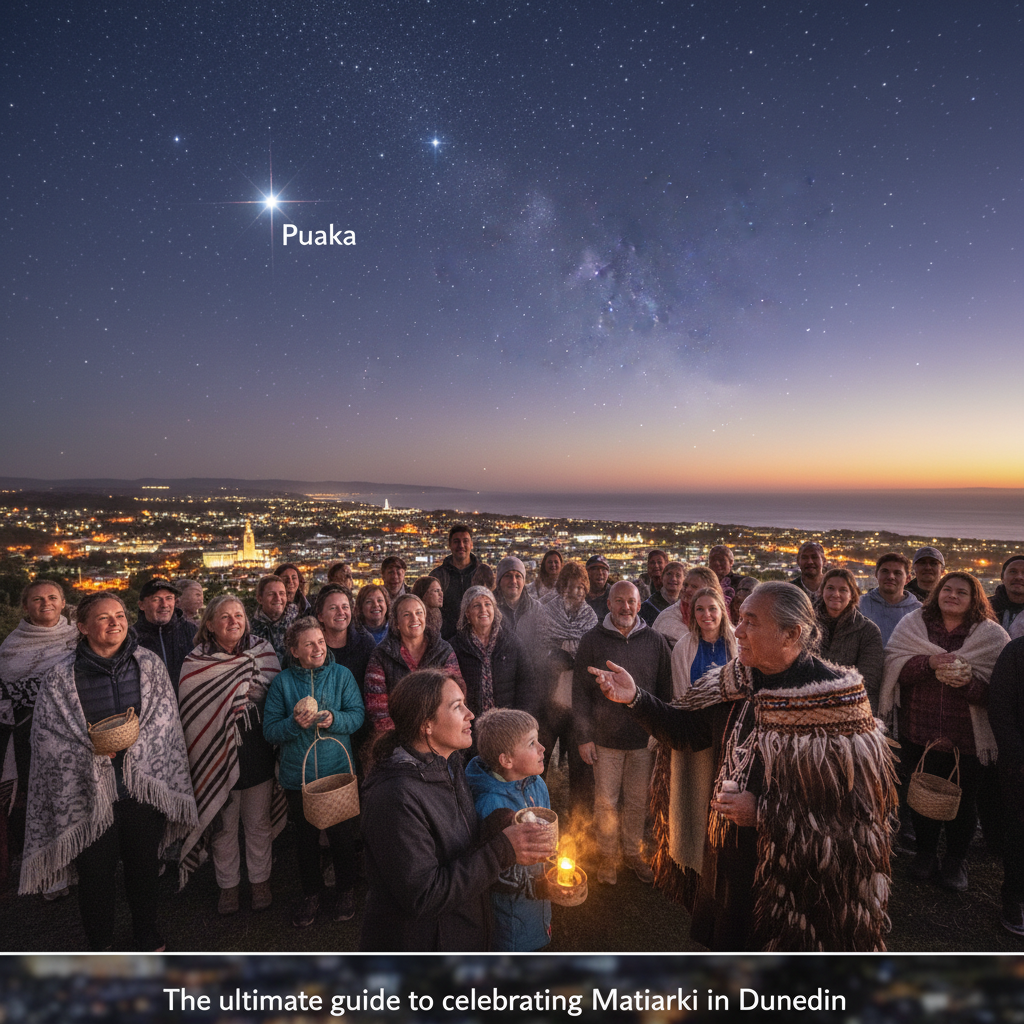
Matariki is a time to remember, to give thanks, and to look ahead. In Ōtepoti Dunedin, it is also a distinctly southern celebration, because for many Kāi Tahu whānui the new year is heralded not only by the Matariki cluster, but also by Puaka, the bright star known elsewhere as Rigel.
This guide brings together what the public holiday means, how to understand Puaka and local tikanga, and where to find events and whānau-friendly activities around town. It is written for locals and visitors who want to take part respectfully, whether you are up before dawn for a hautapu ceremony or you are keeping it simple with kai, kōrero, and a night under a crisp Otago sky.
What is Matariki and why it matters in Dunedin
Matariki marks the Māori new year, signalled by the midwinter appearance of Matariki, a cluster of stars also known as the Pleiades. Across Aotearoa, communities welcome Matariki with ceremonies before sunrise, remembrance of those who have died, sharing of food, and setting intentions for the year to come.
The Matariki public holiday is set each year using a lunar calendar approach, falling on the closest Friday to the Tangaroa lunar period in the lunar month of Pipiri. Te Papa has a clear explainer and confirmed dates if you want to plan ahead: Dates for the Matariki public holiday.
In Dunedin, the season is commonly referred to as “Matariki mā Puaka” to acknowledge local Kāi Tahu traditions that place Puaka at the centre of the new year. That difference is not a technicality, it reflects the realities of the southern sky and the whakapapa of knowledge in Te Waipounamu.
Puaka and Kāi Tahu traditions: why the southern new year is different
For many Kāi Tahu communities, the rising of Puaka is a key marker of the new year. Puaka is a prominent star in the constellation Orion, and its brightness and timing make it a strong seasonal signal in the south. In Kāi Tahu narratives, Puaka’s appearance is associated with the start of a new cycle, a cue for remembering loved ones, preparing for the colder months, and planning for the seasons ahead.
You will often hear the phrase “Matariki mā Puaka” during Dunedin’s winter celebrations. It is a reminder that there is more than one way of reading the sky in Aotearoa, and that local iwi perspectives should lead local observances.
If you are attending a ceremony, the best approach is to follow the lead of organisers, listen more than you speak, and treat the moment as a community welcome rather than a performance. Where there is karakia or waiata, you can participate respectfully if invited. Where there is silence, keep it.
Events on the Matariki public holiday in Dunedin (what to do and where to look)
The simplest way to find what’s on is to start with community listings, then confirm details with official hosts and venues in the days leading up to the holiday. Because some council and visitor websites are protected by security filters that can block automated access, it pays to cross-check via venue pages and trusted listing platforms.
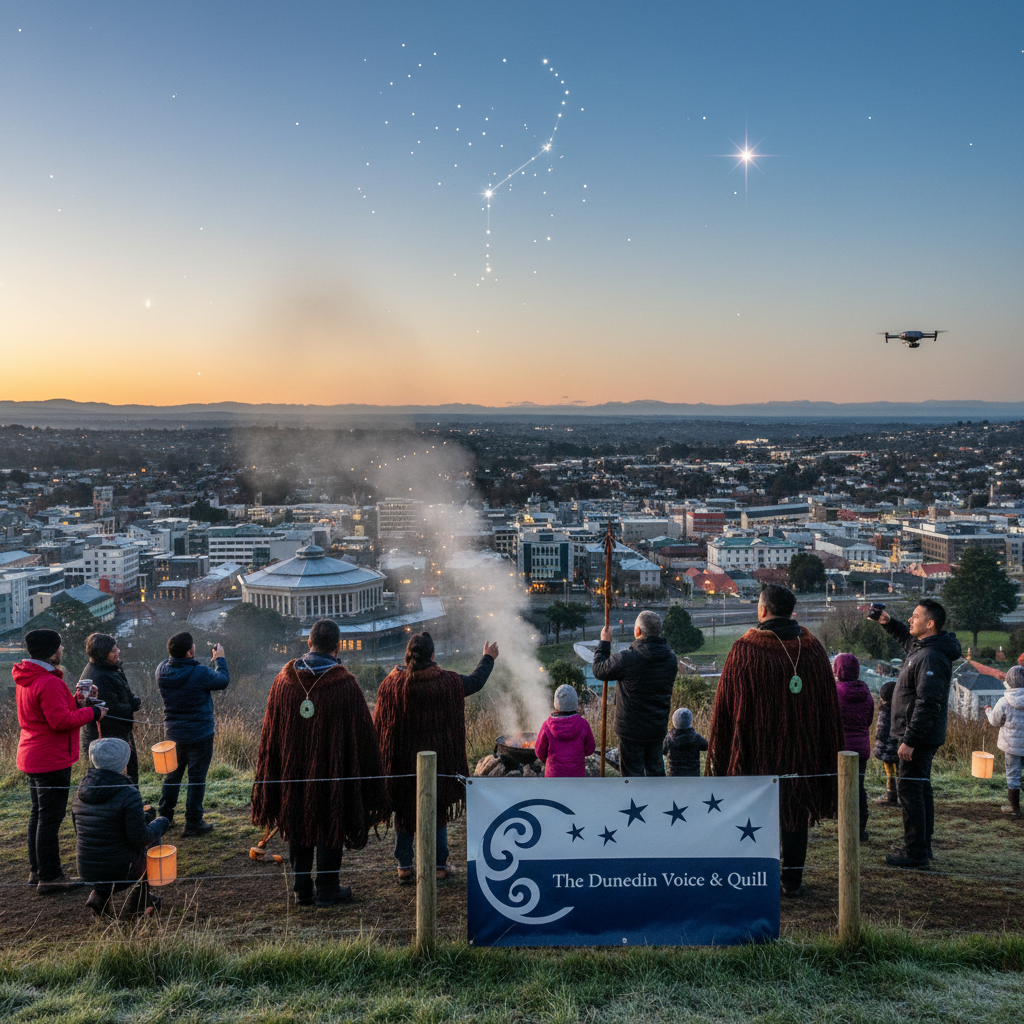
In 2025 and 2026, one of the most searched events is the city’s pre-dawn ceremony. Eventfinda lists “Matariki Ahuka Nui Dawn Ceremony” in Dunedin as a public gathering to welcome the Māori new year: event details here. Always check the organiser’s updates for exact meeting points, timings, and wet-weather plans.
For local context on how Dunedin marks the day, see our coverage of the community dawn ceremony: Dunedin to mark Matariki with community dawn ceremony.
You can also keep an eye on the Puaka Matariki Festival’s social channels for dates and programme announcements. The festival’s Facebook page notes the 2026 Dunedin Puaka Matariki Festival runs from Saturday 4 July to Saturday 25 July: Puaka Matariki Festival on Facebook.
If you are planning a long weekend with tamariki, it can help to pair a dawn event with a daytime indoor option, like a museum session, then finish with a low-key dinner at home.
Best Matariki events and experiences in Dunedin
Below are some of the most reliable, bookable, or family-friendly ways to mark Matariki in Ōtepoti. Details can change year to year, so treat these as starting points and confirm closer to the date.
Matariki Ahuka Nui dawn ceremony (pre-dawn hautapu-style welcome)
What it is: A public pre-dawn gathering to welcome the new year, with tikanga-led elements that may include karakia, remembrance, and shared warmth afterwards.
Where: Dunedin, exact location varies by year. Check Eventfinda listing for the current year’s meeting point.
Cost: Typically free, some events invite koha.
When: Pre-dawn on or around the public holiday Friday.
How to plan: Dress for a frosty morning, bring a torch, and arrive early. Avoid arriving mid-ceremony.
More info: Eventfinda listing and our local explainer: DVQ coverage.
Otago Museum planetarium: Tūhuratia a Matariki mā Puaka
What it is: A special three-part planetarium session combining Night Sky Live, the short film Waka Whetū, and Otago Museum’s in-house production Mārama ā Whetū, focusing on Māori sky lore and the southern night sky.
Where: Perpetual Guardian Planetarium, Otago Museum, 419 Great King Street, Dunedin.
Cost: General admission $20.
Typical schedule: 5.30pm to 7pm on selected June dates (for example, Wednesday 8, Thursday 9, Saturday 11, and Sunday 12 June in one published programme). Check the museum’s website for the current year’s dates.
Website: Otago Museum: Tūhuratia a Matariki mā Puaka.
Why it’s worth it: If cloud ruins your stargazing plans, this is the best “guaranteed sky” option in town.
Puaka Matariki Festival (city-wide programme across July)
What it is: A multi-week festival that typically spans performances, workshops, talks, and community gatherings, reflecting the “Matariki mā Puaka” identity of the region.
Where: Multiple venues across Ōtepoti.
Cost: Mix of free and ticketed events.
When: The festival’s Facebook page indicates 2026 dates as Saturday 4 July to Saturday 25 July.
Website/social: Puaka Matariki Festival.
Local tip: If you miss the public holiday itself, the festival programme usually gives you another chance to take part.
Where to see Matariki and Puaka near Dunedin (best local stargazing spots)
Seeing the stars is never guaranteed in winter, but Dunedin has an advantage, within 20 to 40 minutes you can get away from the brightest streetlights.
For Matariki: Matariki sits low in the north-east before dawn in midwinter. Te Ara’s guide suggests looking between about 5.30am and 6.30am and using Tautoru (Orion’s Belt) as a reference point: Te Ara: Matariki in the night sky.
For Puaka: Puaka (Rigel) is a bright star in Orion and can be easier to pick out. In the south, it is often discussed as a seasonal marker alongside the Matariki cluster.
Good local spots: Sandymount and Highcliff Road lookouts on the Otago Peninsula, the Skyline track areas above Roslyn (choose safe, legal roadside pull-offs), or any dark-sky patch along the Taieri Plains if you have a vehicle.
Safety and etiquette: Use red-light torches if possible, keep noise down near homes, and do not trespass for a better view.
How to celebrate Matariki at home in Dunedin (simple, respectful ideas)
Not everyone can make it to a dawn event, and that is fine. Matariki is also about whānau and community, and the practices can be adapted to your own context.
- Share kai, a pot of soup, rewena-style bread, or a shared breakfast after sunrise.
- Remember those who have died, light a candle, say their names, or visit a favourite place (weather permitting).
- Set intentions, write down goals for the year and put them somewhere you will revisit.
- Learn one whakataukī or a simple pepeha, and practice saying it correctly.
- Support a local cause, donate to a school, sports club, or community pantry.
If your household includes school-aged kids, you can tie Matariki learning into term projects and local curriculum. Our broader education guides can help you understand how schools differ across the city: The ultimate guide to Dunedin schools: zones, deciles, and choosing right. For a grounded example of community support, read how one local principal ran to cover school camp fees: Dunedin principal runs to cover school camp fees.
Family-friendly Matariki activities in Dunedin (free and low-cost options)
Dunedin does winter well, but with little ones you want warm, predictable plans. Here are practical options that fit a Matariki theme.
- Go to the museum, even outside special programmes, Otago Museum is a reliable winter outing. 419 Great King Street.
- Library story time, check your local Dunedin Public Libraries branch for seasonal sessions and displays.
- Lantern-making, if you are heading to the Dunedin Midwinter Carnival, it can pair nicely with Matariki themes of light and winter togetherness. See: Dunedin Midwinter Carnival introduces timed sessions.
- Choose one easy outdoor walk, Ross Creek Reservoir, the Botanic Garden, or St Clair Esplanade, then head home for hot chocolate.
For more ideas that work year-round, our list is here: The ultimate guide: 20+ things to do with kids in Dunedin.
Planning tips for the Matariki public holiday long weekend in Otago
Book ahead: Planetarium sessions and some workshops can sell out, especially if they are the only weather-proof option.
Have a cloud plan: Pick an indoor anchor event, then treat stargazing as a bonus.
Dress for microclimates: Peninsula lookouts can be colder and windier than central Dunedin. If you are visiting from elsewhere, autumn and early winter are increasingly promoted as a shoulder season for travel, with quieter attractions and moody landscapes. Related reading: Christchurch offers packed winter events calendar.
Wellness angle: Matariki can be a reset. If you want a calmer start to the day, keep an eye out for community wellbeing events in the city, such as free yoga sessions at other times of year: Dunedin to host free yoga day for wellness and peace.
Look up, then look around: Matariki is about the sky, but also about people. Make time to check in with whānau, neighbours, and friends who find winter hard.