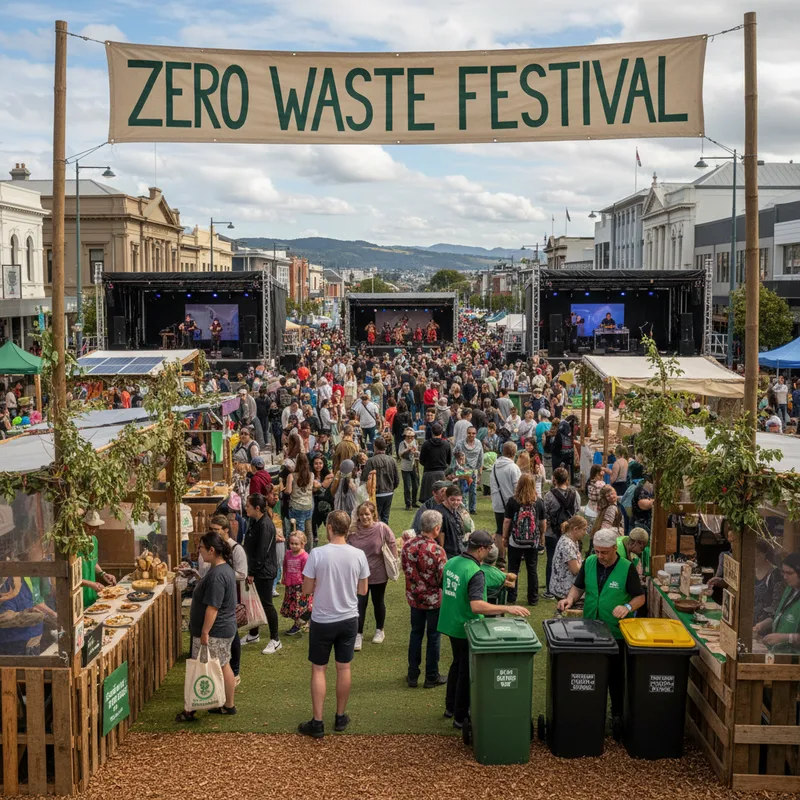
The South Dunedin Street Festival returns this Saturday. Organisers expect between 8,000 and 10,000 people to attend the event, which will feature more than 100 stalls and three performance stages located across the district. The gathering serves as a showcase for local performers and artisans while maintaining a strict environmental policy. The festival arrives as the area prepares for significant infrastructure changes. The Dunedin City Council recently approved a $42 million stormwater upgrade for the suburb. While city engineers focus on the ground beneath the streets, Saturday\'s event aims to highlight those living and working on them.
Performance and street entertainment
Three designated stages will host a rotation of acts throughout the day. The dance and multicultural stage features a lineup including the Naatya School of Indian Dance, the Dunedin K-Pop Crew, and Swing Riot. These performances will be supplemented by roving entertainers, including the Otago Southland Chinese Association lion dance troupe and Queenstown-based juggler Paul Klaass. Music will be concentrated at the band stage. The schedule includes sets from the Mads Harrop Band, The Shenatics, Soul Deep, and Mea Culpa. Local schools are also participating. A 15-person percussion group from Tahuna Normal Intermediate School will perform a set using plastic buckets to create complex rhythms. For younger audiences, the buskers area will host Jay the Juggler. The performer, who holds the 2025 Busker Champion title, will deliver a mix of magic and comedy. The site also includes interactive zones with sumo trucks and a mini ride-on train.
Sustainability and waste reduction
Event organisers are attempting to repeat the environmental success of previous years. The festival operates as a zero-waste event. Last year, the festival achieved a 90% diversion rate from landfills. Despite the large crowd, only 11kg of rubbish was sent to the landfill from a total of 111kg of waste collected. That volume is equivalent to roughly half a standard wheelie bin. To maintain these figures, attendees are being asked to bring their own reusable food kits. This includes cups, plates, and cutlery for use at the McBride Street food court. Vendors have been instructed to accept these containers. This focus on waste reduction aligns with regional efforts, such as the Otago Regional Council ECO Fund, which supports local sustainability projects. For those who do not bring their own equipment, the festival will operate a dish library. This service provides reusable plates and silverwear that are washed and returned, eliminating the need for single-use plastic or cardboard alternatives. This model is becoming more common in regional festivals as councils look to reduce the environmental cost of large public gatherings.
The makerspace and repair station
A significant addition to this year\'s programme is the repair station located at the South Dunedin Library. The station operates on a "make and mend" philosophy. Experts from Stitch Kitchen will be available to assess and repair damaged clothing. Technicians from Com2Tech will handle laptops and digital devices. The Dunedin Gasworks Museum will also play a role in the repair hub. Their staff will assess small household appliances for repair. The museum is also bringing its mobile blacksmith forge to the street, providing live demonstrations of traditional metalworking. This technical focus mirrors other educational events in the city, such as the public talk on environmental sound scheduled for later this month.
Market zones and local trade
The festival has been organised into themed zones to assist with navigation. Artisan Alley will host more than 30 stalls featuring 3D-printed models, local honey, fragrances, and jewellery. Other sections include a vintage and pre-loved zone, a health and wellbeing space, and a history and civics area. The food court on McBride Street is designed to complement existing permanent businesses on King Edward Street. Local retailers such as Zodiac Records have historically reported high foot traffic during the festival. The inclusion of diverse sporting and gaming groups provides a different pace for those looking for active participation rather than shopping. This event is part of a busy autumn schedule for the city. It follows the start of the Dunedin Fringe Festival and precedes the Wild Dunedin festival in April. The focus on local identity remains a priority for organisers, who see the street festival as an opportunity for different groups to connect. Road closures will be in place around the King Edward Street area for the duration of the event. Public transport users are advised to check the Orbus website for route diversions. The festival begins on Saturday morning and is expected to run until late afternoon.